The inconvenient truth nobody warns you about
Hormonal birth control changes how your body experiences pleasure. Not in some vague "it affects your mood" way. In a specific, measurable, neurochemical way that directly impacts clitoral sensation and arousal speed. And honestly? Most people don't realize it's happening until they've been on the pill, patch, or ring for months.
The frustration is real. You might feel like you're broken, or that your partner isn't doing things right anymore, or that you've simply lost interest. You haven't. Your brain chemistry has shifted, and your clitoris is literally responding to different signals than it did before.
Here's what I see clinically: people switch birth control methods, notice their sensation has changed, and then they either white-knuckle through it or abandon pleasure altogether. Neither is necessary. The fix is usually much simpler. You just need to understand what's actually happening and adjust your tools and technique.
How hormonal birth control rewires arousal
Hormonal contraception works by suppressing the hormonal surge that triggers ovulation. That means the dopamine spike, the testosterone lift, and the estrogen fluctuation that used to happen mid-cycle just don't anymore. You're running on a steady, flat hormonal landscape instead of a dynamic curve.
This is especially noticeable with combined oral contraceptives (the kind with estrogen and progestin). Your baseline testosterone drops. Testosterone is a major player in desire and clitoral sensitivity in everyone, regardless of gender. Lower testosterone means slower arousal, less urgent desire, and often a feeling that your clitoris is "asleep" compared to what it used to be.
The progestin in hormonal birth control also affects how your nervous system responds to stimulation. Your clitoris has around 8,000 nerve endings. The way those nerves fire depends partly on hormonal context. On hormonal birth control, the threshold for activation goes up. You need more sustained, more deliberate stimulation to reach the same level of sensation you used to get faster.
Here's the part that matters: this is not permanent, not a sign you should stop the birth control if it's working for you otherwise, and not something you have to accept in silence.
Why clitoral vibrators work better when sensation shifts
This is where tools make a real difference. A traditional vibrator (like a wand or bullet) relies on speed and external vibration to trigger nerve response. It works fine when your nerves are primed. When arousal is slower and clitoral sensitivity is dampened, you're asking those 8,000 nerve endings to respond to a signal they're not as ready to receive.
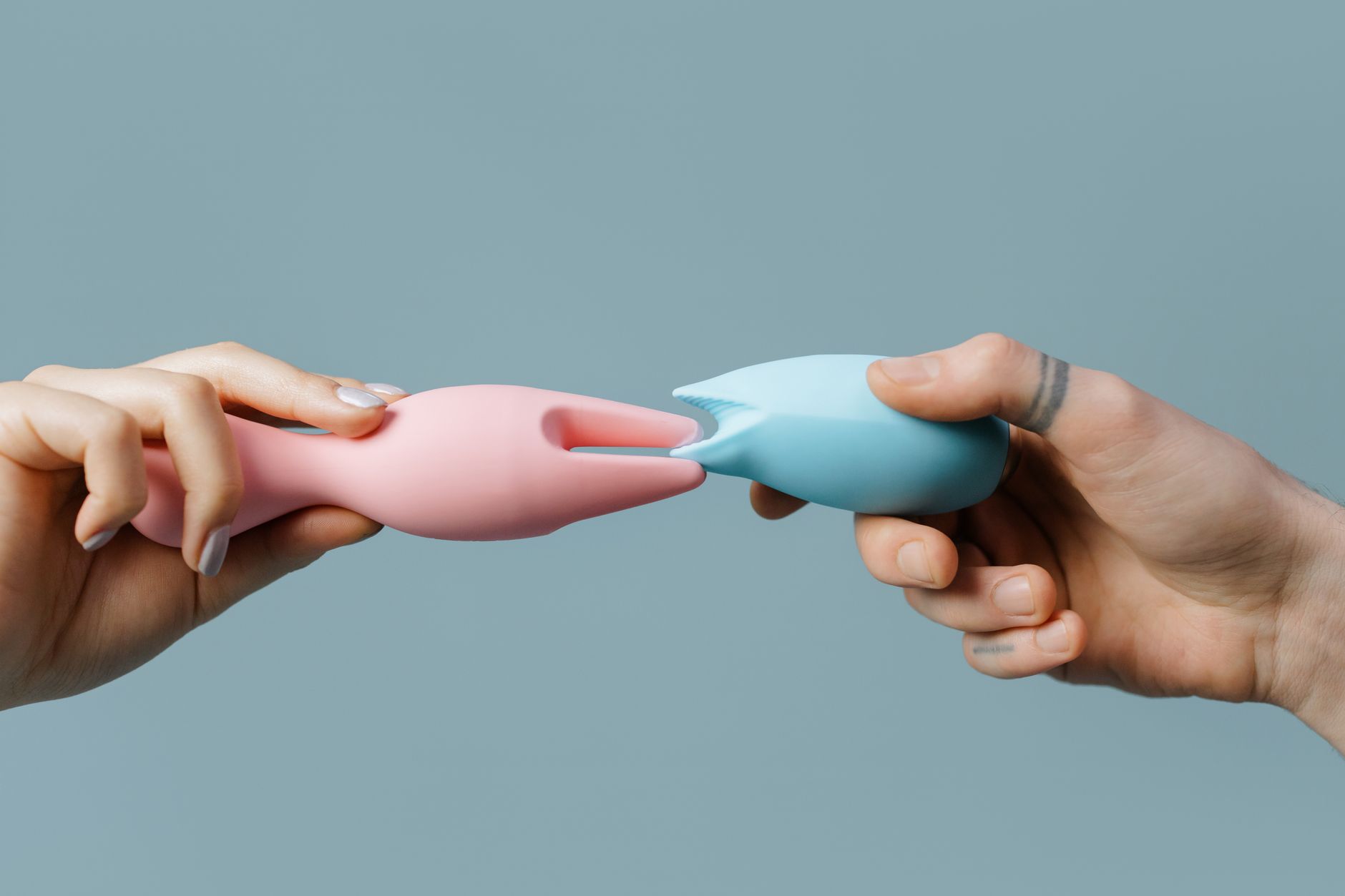
Clitoral vibrators like the lemon vibrator or lemon sucker work via a different mechanism. They use suction and gentle pulsing, which creates sustained stimulation rather than rapid vibration. This is more effective when you're working with a lower baseline of arousal because it builds sensation gradually instead of asking for an immediate neural spike.
The suction also engages a broader surface area of nerve tissue, not just direct point contact. That distributed stimulation is easier for a less-responsive clitoris to register. It's like the difference between someone tapping your shoulder versus someone holding your hand. One requires you to notice a discrete event. The other creates an ambient sensation you can't ignore.
Adjusting your routine when sensitivity flattens
Four practical changes that work for almost everyone I work with.
Start earlier than you think you need to. On hormonal birth control, arousal is slower. Budget an extra 10 to 15 minutes before you want to be at full pleasure. This sounds like "more foreplay" but it's actually just starting the process earlier. If you used to need five minutes of warm-up and now you need 20, the issue isn't that you're less interested. It's that the timeline has shifted.
Use lube even if you don't think you need it. Hormonal birth control can lower natural lubrication slightly. More importantly, lube changes the friction dynamics. When clitoral sensitivity is lower, the reduced friction from lube actually helps your nervous system register the touch more clearly. Water-based lubricant works best with silicone toys from Helo Nancy Shop.
Layer sensations instead of going straight to intensity. Start with a lower setting on your lemon vibrator. Let your body register the suction and pulsing for a solid minute before you increase intensity. Your nervous system needs time to "wake up" to the sensation. Jumping straight to the highest setting often backfires because you're asking your less-responsive clitoris to register a signal that's too strong to process.
Pair visual or mental focus with physical stimulation. When arousal is chemically slower, your brain's engagement matters more. That might mean fantasy, erotic content, or simply closing your eyes and concentrating on the physical sensation. Your mind is not a distraction. It's part of the arousal chain. When hormones are flatlined, mental engagement does half the work.
The role of consistency and rhythm
When you're on hormonal birth control and clitoral sensitivity is lower, rhythm becomes more important than it was before. Your clitoris responds better to steady, predictable stimulation than to varied intensity or changing patterns.
This is why the pulsing rhythm of a lemon vibrator often works better than an inconsistent wand vibrator. The suction-and-release pattern gives your nervous system something consistent to respond to. Your body can build on that rhythm. It's easier for arousal to climb when the stimulus is predictable.
This also means partner involvement might feel different. If you've always relied on varied touch from a partner, you might find that you need them to stay with a single rhythm longer. That's not them doing something wrong. That's your nervous system needing steadier input.
When to consider adjusting your birth control
If you're on hormonal birth control and your clitoral sensation has dramatically dropped, you have options. This isn't a "you have to accept it" situation.
Some people do well switching to a lower-dose pill or a different progestin formulation. Others find that non-hormonal methods (copper IUD, condoms, rhythm tracking) restore sensation completely. Some stay on hormonal birth control but add a small amount of testosterone therapy, which is increasingly available and can be genuinely transformative.
The key is talking to a provider who actually listens to this stuff. Most standard gynecologists minimize pleasure concerns. A Planned Parenthood clinician or a sex-positive GP will take this seriously. You deserve both effective contraception and intact pleasure. Those aren't mutually exclusive.
Making pleasure work within your body's current reality
Here's the reality: hormonal birth control is a reasonable choice for many people, and it does change arousal and sensation. That doesn't mean you lose access to pleasure. It means you become more intentional about it.
When how to use a lemon vibrator when arousal feels scattered or hard to focus, the principles are the same as when birth control flattens your baseline: you're working with a nervous system that needs more deliberate, sustained input. That's not broken. It's just different.
Clitoral vibrators like the lemon vibrator are specifically designed for this scenario. The suction mechanism works when direct vibration doesn't. The pulsing rhythm gives your nervous system something to sync with. And honestly, many people find that once they adapt to their new arousal timeline, they discover orgasms that are actually deeper and more full-bodied than what they had before.
It's not about losing pleasure. It's about understanding how your body works right now and using tools that match that reality.
FAQ: Questions people actually ask
Do I need to switch birth control if my clitoral sensitivity has dropped?
Not necessarily. But you do have options. Some people find that a lower-dose formulation or a different progestin works better. Others stay on their current method and adjust their pleasure routine. The key is knowing you have a choice and talking to a provider who takes pleasure concerns seriously. If sensation loss is really distressing, it's worth exploring with a clinician.
How long does it take for arousal to adjust to hormonal birth control?
Most people notice changes within the first one to three months. Your body usually stabilizes after three to six months on a new hormonal method. If you're several months in and arousal is still flat, it might be worth trying a different formulation or talking to your provider about adjustments. Some people adapt quickly. Others take longer.
Will using a lemon vibrator help if hormonal birth control has dampened my sensation?
Yes. The suction mechanism works differently than traditional vibration, and it's often more effective when clitoral sensitivity is lower. The pulsing rhythm is also easier for a less-responsive nervous system to register. Many people find that a lemon clitoral vibrator restores access to pleasure that felt lost after starting hormonal contraception.
Can my partner do anything to help if my arousal is slower on birth control?
Absolutely. The most helpful thing is extended warm-up. Slower arousal doesn't mean less arousal. It just means a longer timeline. Consistent, steady rhythm often works better than varied intensity. And honestly, talking about this directly (not during sex, but during a regular conversation) helps both partners understand that slower arousal is a system shift, not a relationship problem.
Is clitoral numbness on hormonal birth control permanent?
No. It shifts back when you stop the hormonal method, though it can take a few cycles. For some people, the numbness sensation is mostly psychological—the expectation that nothing will feel good becomes self-fulfilling. For others, it's genuinely neurochemical. Either way, adjusting your technique and tools usually helps right away.
Can I add anything to my birth control routine to increase clitoral sensitivity?
That depends on your method and your provider. Some people find that a very small dose of testosterone therapy helps. Others notice that certain activities (more exercise, better sleep, managing stress) actually do shift arousal noticeably. The surest fix is usually pairing your birth control with tools designed for lower-sensitivity scenarios, like a lemon vibrator, and giving yourself permission to take longer with warm-up.
The bottom line
Hormonal birth control is a tool with real tradeoffs. Effective contraception is important. So is pleasure. The good news is that understanding what's happening neurochemically gives you agency. You're not broken. Your clitoris isn't less capable. Your nervous system is just operating under different hormonal conditions now.
Clitoral vibrators work better in this context because they match how your body actually responds. Suction stimulation, steady rhythm, and extended warm-up become your allies. Many people find that once they stop fighting their new arousal timeline and start working with it, pleasure comes back stronger than before.
If you want to talk through your birth control options or explore how to adapt your pleasure routine, reach out. Contact us and let's figure out what actually works for your body right now.