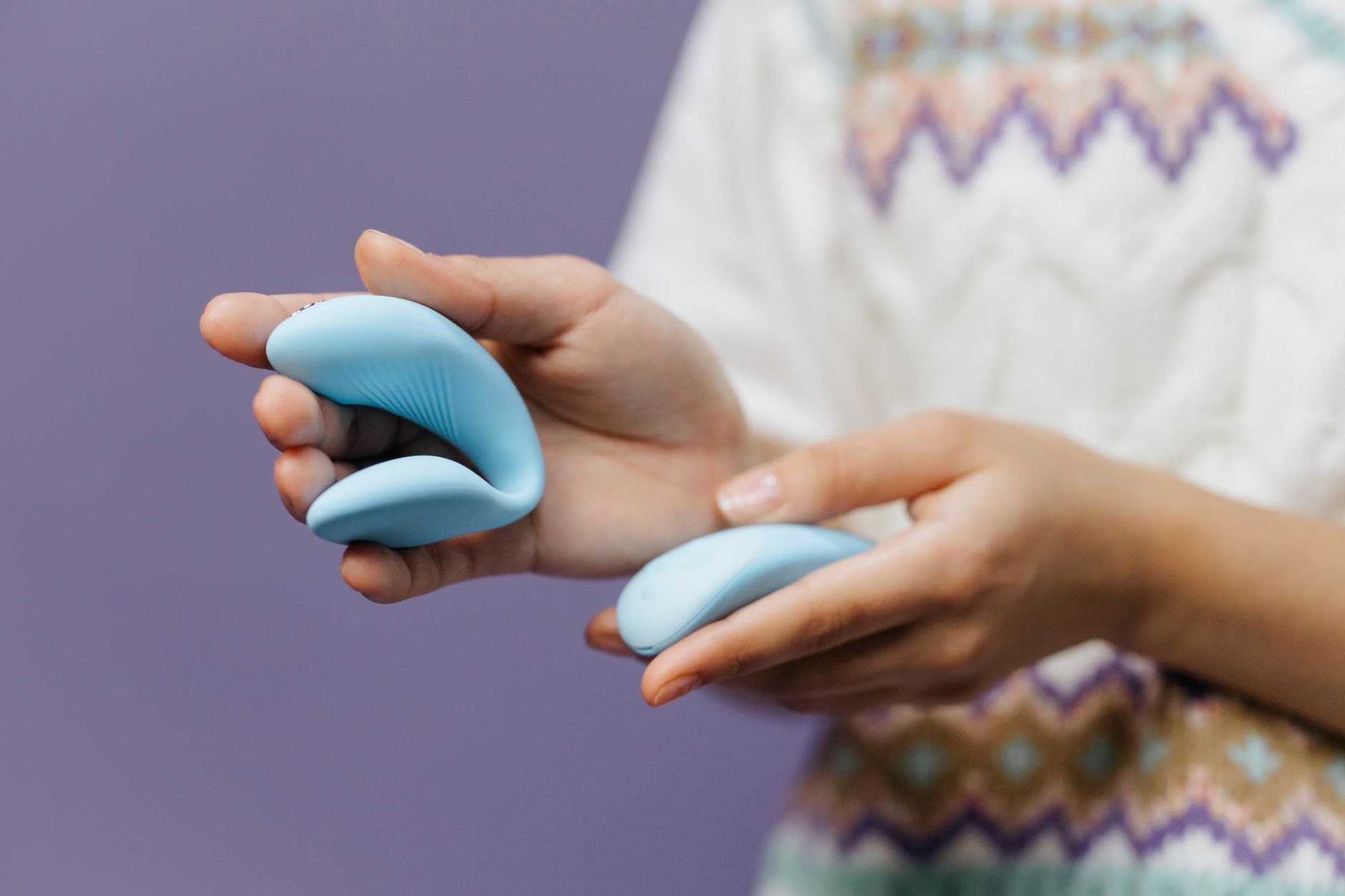
When life pivots, your body often does too
Let's be real. Your desire doesn't disappear during a major life transition because you're broken or losing attraction. It disappears because your nervous system is in survival mode. A new job, a move to a different city, kids starting school, a career pivot, becoming an empty nester, a family health crisis. These aren't small things. Your brain is running a thousand background processes just trying to orient itself to the new baseline. Pleasure gets downgraded to nice-to-have.
The frustrating part? You still want to want it. You miss the version of yourself who felt desire without thinking about it. And your partner (or your own sense of yourself) is waiting for that version to return.
Here's the thing nobody tells you. Desire doesn't magically come back when things settle down. It comes back when you deliberately invite it back. A lemon clitoral vibrator is one of the most effective tools for sending that invitation.
Why desire vanishes during life upheaval
There's actual neuroscience behind this. When you're in transition mode, your brain prioritizes threat detection and problem-solving. Arousal requires the opposite state. Your parasympathetic nervous system (the rest-and-digest one) has to be online for pleasure to build. When you're worried about the new commute or whether your kid will make friends at their new school, that system is offline.
Hormone-wise, stress hormones like cortisol spike during upheaval. Cortisol directly suppresses testosterone, the hormone that drives desire in everyone. It also shunts blood away from your genitals and toward your muscles and brain. Your body literally disagrees that this is the moment for pleasure.
Then there's the mental bandwidth piece. Pleasure requires presence. It's hard to be present during sex when you're mentally reviewing a list of things you still need to unpack or worry about. Most people in transition mode are running on autopilot. Being touched feels like one more demand on an already overextended system.
None of this means your desire is broken. It means your desire has a very sensible reason for taking a step back.
Why lemon clitoral vibrators work when you're in recovery mode
A lemon sucker like the Lem works differently than penetrative sex or partnered touch. It's completely self-directed, which matters. You're not trying to perform arousal for someone else or manage their experience. You're just checking in with what your body can feel right now. That distinction is huge when you're already feeling depleted.
The suction mechanism is also gentler than friction-based vibrators. After life upheaval, your nervous system is oversensitive to pressure and intensity. Suction stimulates nerve endings without that direct mechanical friction. It feels more like a full-body massage than a demand. Many people find that their first real pleasure response during a transition comes from this sensation because it feels safe rather than performance-based.
Clitoral vibrators also bypass the entire arousal-buildup timeline. You don't have to wait for desire to return naturally. You can access physical pleasure on a completely separate track from emotional desire. Sometimes that physical sensation is what your body needs to remember that pleasure still exists. The emotional desire often follows once your nervous system realizes it's actually safe.
Step-by-step: using a lemon vibrator when you're rebuilding
Start with curiosity instead of expectation. Don't set out trying to orgasm. That's too much pressure when you're already depleted. Instead, spend 10 minutes just noticing what sensations feel good. Pattern 1 or 2 on the Lem. No finish line. This is reconnaissance.
Time it strategically. You need genuine alone time where nobody needs anything from you and you're not running through a mental to-do list. That might mean 15 minutes after everyone goes to bed, or a Sunday morning before your household wakes up. It's worth protecting this window because it's the only time your parasympathetic nervous system can actually activate.
Use it as a transition ritual, not a performance. The Lem works best when you're thinking of it as a way to shift gears mentally. I'm moving from work-mode to my-body mode. I'm checking in with myself. This is for me, not for anyone else. That mindset shift is often more important than the physical sensation.
Pair it with something grounding. Sometimes pleasure feels easier when you anchor it to something else. Some people use the Lem while listening to a specific playlist, or after a bath, or while reading something that interests them. Your nervous system gets the signal: this is safe, this is intentional, this is mine.
Don't compare your response to pre-transition you. Your body is different right now. You might climax faster. You might feel numb. You might feel weirdly intense sensation that surprises you. All of that is normal. You're not trying to reproduce the old version. You're building a new one that fits who you are now.
When to involve your partner
If you're coupled, this is a solo project at first. Your partner doesn't need to be watching or involved or even particularly interested. You're rebuilding your relationship with your own pleasure. Once you've reestablished that connection on your own terms, your partner can be invited in. But the pressure to perform or explain or respond right away during a major life transition is usually the opposite of helpful.
If your partner is curious or wants to participate, the conversation is straightforward. "I'm using this to help my body get back online during all this change. It's not about you. But once I figure out what feels good again, we can explore that together if you want." Most partners respond really well to that clarity.
The bigger picture: pleasure as a radical act during chaos
Here's what I've observed working with couples through major transitions. The ones who rebuild desire fastest aren't the ones who wait for life to settle down. They're the ones who actively reclaim pleasure as part of their identity, even (especially) during chaos.
Using a lemon clitoral vibrator when you're in transition mode sends a message to your entire system. Your pleasure matters. Your body's sensations matter. Even when everything else is in flux, this one thing is still yours. That's not selfish. That's essential maintenance.
Desire doesn't return on a schedule. But it returns faster when you're deliberately keeping that door open. The Lem is one of the gentlest, most effective ways to do that.
People also ask
Is it normal to have no desire during a major life change?
Completely normal. Your nervous system prioritizes survival and orientation during upheaval. Desire isn't frivolous, but your brain temporarily categorizes it as lower priority than managing stress and uncertainty. This is temporary. The fact that you're noticing the absence and wanting it back is actually a good sign that your system hasn't permanently shut down.
How long does it usually take for desire to return after a life transition?
It depends entirely on the transition and your individual recovery timeline. Some people feel their first glimmer of desire back within weeks. Others take months. The key is that you don't wait passively. Using a tool like a lemon vibrator helps you stay connected to your body during that waiting period, which often speeds up the process.
Can I use a lemon vibrator if I'm not attracted to my partner right now?
Yes. This is important. Lack of desire during life chaos doesn't mean lack of attraction. It means your nervous system is offline. Reconnecting with your own body separately from partnered sex often helps you feel attraction again once you're more settled. The lemon clitoral vibrator helps you maintain that individual thread while everything else is reorganizing.
What if my partner doesn't want me using a vibrator during this time?
That's a separate conversation from the pleasure question. If your partner is uncomfortable with you using a vibrator, that's worth exploring with honesty. Sometimes partners worry that a vibrator means you're unhappy with them, especially during an already-stressful transition. Sometimes it's about their own beliefs about sexuality. Either way, how to use a lemon vibrator when your partner resists toys is a conversation worth having directly, not something to hide.
Is a suction vibrator better than a traditional vibrator for rebuilding desire?
For many people recovering from life transitions, yes. Suction feels less intense and more like stimulation rather than vibration. It's gentler on an already-sensitive nervous system. But what matters most is that you're building a relationship with your pleasure on your terms. Some people prefer the Lem, others prefer a different style. Experiment without pressure.
How do I know if my lost desire is about the life change or something deeper?
If your desire returns gradually as your life settles, it was about the transition. If months pass after things stabilize and desire still hasn't returned, it might be worth talking to a therapist or your doctor. Desire loss can sometimes signal depression or other things worth addressing separately. But during the active transition period, assume your nervous system is doing exactly what it's supposed to do. Give it permission to come back online slowly.