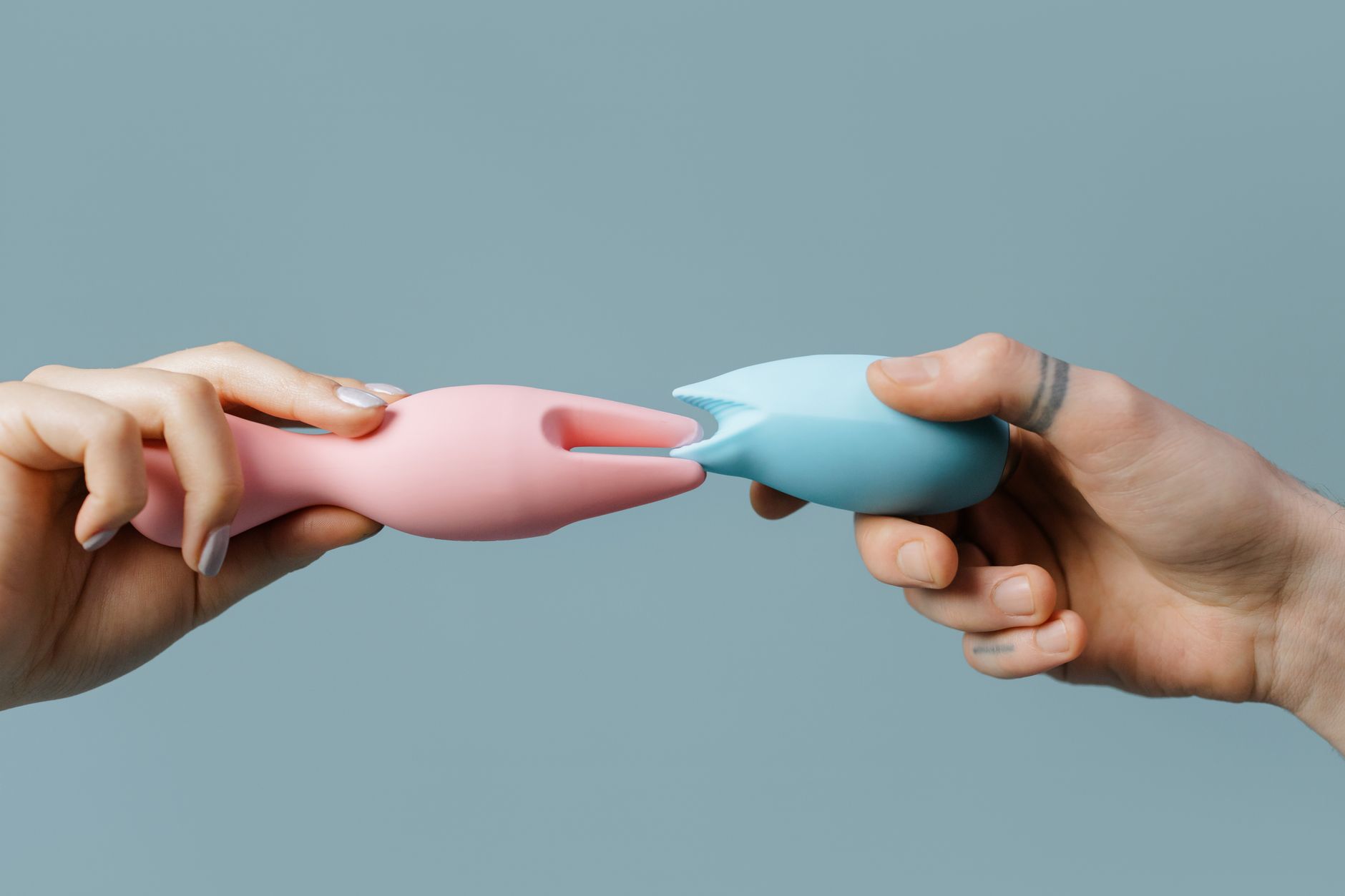
Let's name the problem
One of you gets there in minutes. The other needs a whole different timeline. And somewhere in the middle, resentment starts building because someone always feels rushed, bored, or like they're performing instead of actually enjoying themselves.
This is one of the most common issues I see in couples work, and it's almost never talked about. We discuss orgasm gaps as if they're rare or shameful. They're neither. They're just physics and neurology colliding with emotion.
Why your pleasure timelines don't match
First, the biological part. People with vulvas take an average of 10-20 minutes to orgasm. People with penises average 2-5 minutes. That's not a personal failure or a sign of dysfunction. It's how our bodies are wired.
But timing differences go deeper than anatomy. Medications shift how quickly arousal builds. Stress narrows your ability to focus. Hormones cycle your sensitivity. Some people need mental stimulation more than physical. Others need penetration before direct clitoral touch even feels good.
Then there's the emotional layer. If you've spent years feeling like your pleasure is an inconvenience to your partner, you unconsciously speed yourself up. If your partner has felt guilty about finishing too fast, they might be trying so hard not to that they've lost connection entirely.
The real problem isn't the timeline difference. It's that you're both trying to solve it alone instead of together.
Why a lemon vibrator changes the equation
A lemon clitoral vibrator like the Lem does something that fingers or a penis can't quite manage: it lets one partner receive direct, consistent stimulation while the other partner is still present without performing.
Here's what that actually means for mismatched timelines.
Let's say you (the faster finisher) are with your partner who needs longer. Instead of you lying there waiting, trying not to move because any friction speeds you up more, you both have permission to use the vibrator together. You're not watching the clock. You're not pretending. The lemon suction technology stimulates nerves in a way that's different enough from penetrative sex that it can extend arousal instead of rush it.
For the partner who takes longer, the beauty is that suction vibrators build sensation gradually. You don't need to match anyone else's pace. The Lem can be on pattern 1 for ten minutes while your partner is inside you, and you're building toward your own rhythm, not theirs.
How to actually introduce this
Don't bring it up mid-sex when someone's already frustrated. Have this conversation clothed, awake, and when you're not in the middle of intimacy.
The opening: "I've noticed our bodies have different speeds, and I think I've been blaming myself instead of solving it together. I want us both to feel good." That's it. No shame, no data dump, no accusation.
Then: "What if we tried something that lets us both get what we need at our own pace?" If your partner's curious, you can explain that lemon clitoral vibrators work differently than traditional vibrators. They use suction instead of pure vibration, which means gentler, more focused stimulation that can take time to build without being overwhelming.
If your partner's hesitant, find out what the hesitation is about. Is it that they feel like they're not enough? Say explicitly: "You are. This isn't about you. It's about us both getting to enjoy this together." Is it that toys feel impersonal? Explain that the goal is for you to use it together, not in place of each other.
The mechanics that actually work
When you're ready to try it.
Start with penetration or however you usually connect. Once your faster partner is aroused, introduce the lemon vibrator on the lowest setting. No pressure to come immediately. The point is that you're both present, both getting what you need.
For the partner who finishes faster: you might find that once the pressure to "wait" lifts, your arousal actually slows down. Paradoxical, but true. When you're not anxious about coming too soon, your body relaxes slightly. You might last longer naturally.
For the partner who needs longer: you're not racing anymore. You can stay on pattern 2 or 3 of the lemon vibrator for as long as you need. Your partner can be touching you, inside you, kissing you, or just present beside you. The vibrator does the consistent work while you build.
Timing-wise, if one of you wants to finish first, that's fine. The vibrator means someone doesn't have to stop and wait. You can continue together, or switch focus, or rest and reconnect. You're not locked into a simultaneous finish that leaves someone depleted.
The emotional reset this creates
The biggest shift I see with couples who solve this is that resentment evaporates. Not because the timelines suddenly match, but because you've both agreed that getting there matters more than getting there together.
You stop feeling like your pleasure is an inconvenience. Your partner stops feeling like they're not enough. Sex becomes something you're doing together instead of something you're negotiating.
How to Use a Lemon Vibrator When Partner Pressure Feels Intense covers a related issue: when the pressure itself kills arousal. This is different, but the tool is the same.
One more thing that shifts: you both get permission to focus on sensation instead of performance. If your partner's inside you and you're using a lemon clitoral vibrator, they can feel that vibration too. It changes the physical experience for both of you. For some couples, that becomes their favorite way to have sex. Not because the timelines match now, but because the pressure's gone and the pleasure's higher.
When to use it and when to skip it
Not every session needs the vibrator. Some nights you want quickies. Some nights you want slow, connected sex without any toys. The point is that you have a tool when you need it.
I'd suggest trying it 2-3 times when you're not stressed, not tired, and you have actual time. You're training your nervous systems that mismatch is solvable. That takes repetition.
If you're still feeling disconnected after a few tries, talk about it. Sometimes the issue isn't the tool. Sometimes it's that one partner's feeling resentful about something else entirely, and the timing difference is just where it surfaces.
When to get support
If bringing this up creates a big fight, or if your partner refuses to engage with the idea at all, that's worth exploring with a couples therapist. Not because there's something wrong with wanting to use toys, but because the resistance itself is information.
Sometimes a partner's hesitation signals that they're feeling inadequate, or that there's a deeper trust issue, or that you're both carrying different assumptions about what sex should be. A good therapist helps you untangle that instead of pushing through it.
Likewise, if your pleasure timeline mismatch is accompanied by low desire, pain, or loss of interest in sex altogether, that's a signal to check in with a doctor or sex therapist. Toys help when the mechanics are the problem. They don't solve underlying medical or emotional stuff.
FAQ
How do I know if my partner's hesitant because of shame versus genuine discomfort?
Ask directly and listen without defending. "It seems like this makes you uncomfortable. What's that about for you?" If they can articulate it, you're in a conversation. If they shut down or turn it into "I don't want to talk about this," there's probably shame involved. Reassure them it's not weird, it's not a reflection on their adequacy, and you can take as much time as they need. Some people need a week to sit with the idea before they're open.
Can we use a lemon vibrator if we have low desire or if sex feels obligatory?
The vibrator won't fix desire mismatch if the real issue is that you're not connecting. In fact, introducing a toy into sex that already feels obligatory can make things worse. This is a couples conversation or therapy conversation first. The lemon clitoral vibrator works best when both partners actually want sex, just at different paces.
What if the vibrator makes one of us feel replaced or less necessary?
That's one of the most common concerns, and it deserves real space. A toy isn't a replacement. It's a tool that lets you both get what you need instead of one of you compromising. If your partner's worried they're not enough, it's because they haven't experience what it feels like when the pressure lifts. Sometimes you have to show them. "You're still here. You're still inside me. This just means I get to focus on sensation instead of worrying about your timeline." Some people need to hear that multiple times.
How do I bring this up without sounding like I'm criticizing how fast or slow they are?
Lead with curiosity and partnership, not critique. "I've been thinking about how different our bodies are, and I love that about us. I don't want either of us to be feeling rushed or bored. What if we tried something that takes the pressure off both of us?" Notice you're not saying "You're too slow" or "You come too fast." You're saying "Our bodies have different needs, and I want us both satisfied."
What if we're using the lemon vibrator and one of us still isn't coming? Is that failure?
No. Not everyone orgasms every time, and that's okay. Sometimes the goal isn't the destination. It's connection, sensation, and presence. If one of you isn't getting there, check in. Are you too in your head? Is something physical uncomfortable? Do you need to stop and reconnect? The vibrator's a tool, not a magic fix. What matters is that you're both trying to meet each other's needs.
How often should we use the lemon vibrator if we have a timing gap?
There's no rule. Some couples use it multiple times a week because it becomes their favorite way to have sex. Others use it occasionally when they know one person's going to need longer arousal. Listen to what feels good for both of you. If it becomes another form of pressure ("we have to use it to be satisfied"), that's a sign to back off and reconnect without it.
What actually changes
When you stop fighting your bodies' different rhythms and start using tools that honor both, sex stops being a source of tension. That shift is worth the awkwardness of buying a toy and having the conversation.
Mismatched pleasure timelines are common. Couples who solve them together are the ones who decide the solution matters more than the embarrassment. Your timeline gap is solvable. Your pleasure both deserve space. Start there.