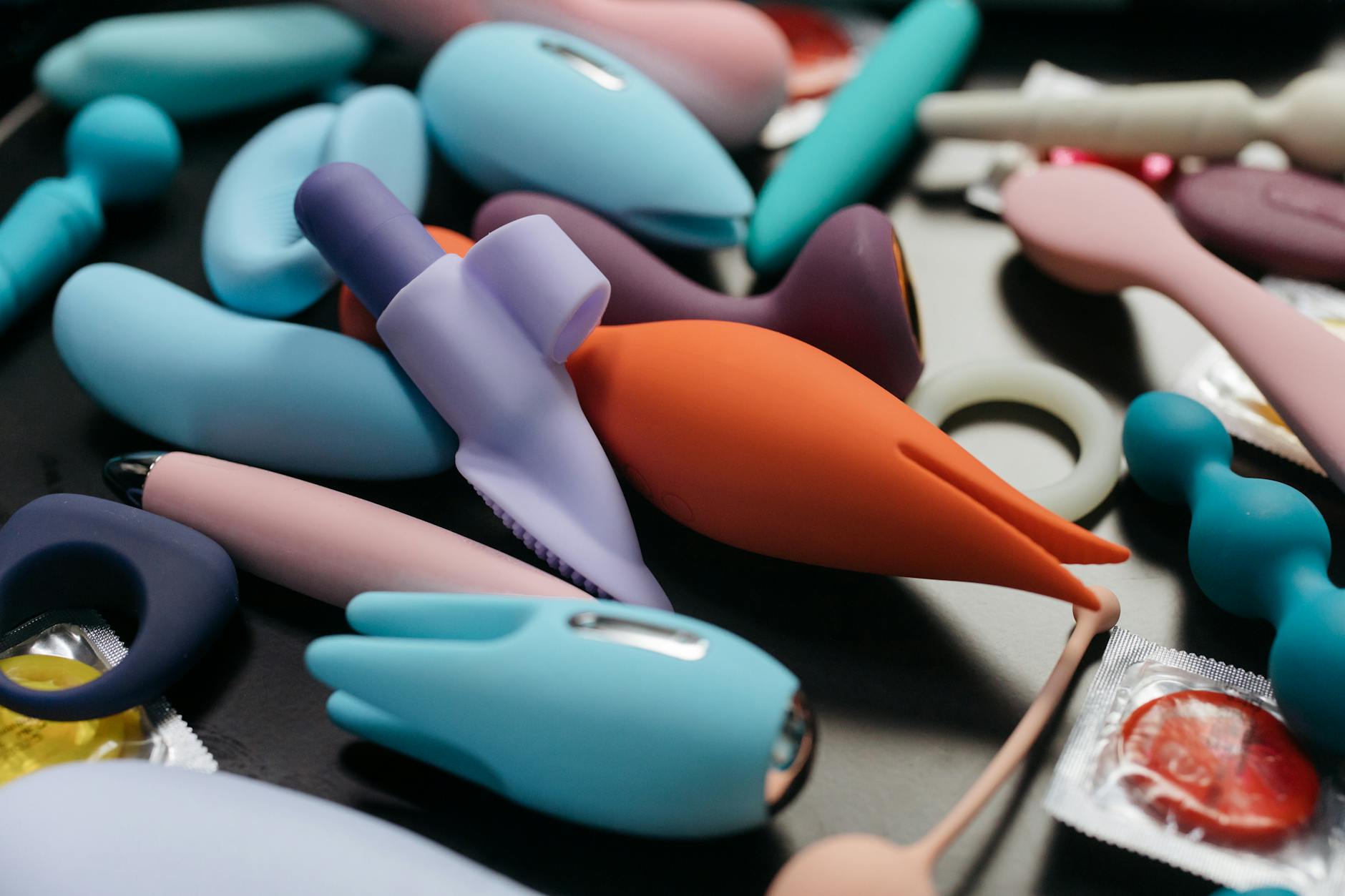
Let's get real about what happens after 40
Your pleasure doesn't disappear after 40. But it does transform. And if nobody's explained that difference to you clearly, you're probably spending a lot of energy wondering if something's wrong.
Nothing is wrong. Your nervous system, hormonal rhythms, and tissue thickness are all responding to time and life in entirely predictable ways. The plot twist: many people report their most intense orgasms happen after 40, not before. The catch is knowing how to work with your body's actual operating system instead of fighting the one from your twenties.
The physiological shifts that happen
After 40, estrogen levels begin their slow decline. You might not notice a dramatic drop immediately, but tissue starts thinning, blood flow patterns shift, and the pelvic floor loses some of the spring it had before. Sensation doesn't disappear. It changes lanes.
Clitoral tissue becomes slightly less engorged with blood, which means it takes longer to respond to direct pressure. At the same time, nerve density doesn't decrease. What changes is speed and the type of stimulation that creates the fastest pathway to orgasm.
This is where the confusion happens. People assume "takes longer to respond" means "something's broken." It actually means "the entry point is different now." Most people I work with discover that suction-based stimulation, like what a lemon clitoral vibrator provides, works radically better than friction-based toys they relied on for years.
Why lemon vibrators specifically help
A lemon vibrator uses gentle suction technology rather than vibration or direct friction. Here's why that matters after 40.
Thinner clitoral tissue responds better to suction because suction engages the nerve endings without the mechanical pressure that can feel either too intense or, oddly, too numb. You're essentially drawing blood to the area while stimulating, which mimics the natural engorgement that used to happen faster when you were younger. The sensation is more concentrated, more direct, and requires less warm-up time than you'd think.
When people switch from a traditional vibrator to a lemon clitoral vibrator around 40 or 45, the feedback is consistent: "I forgot what this felt like" and "I didn't know I could still feel this." That's not placebo. That's biomechanics.
The lem vibrator is specifically designed with settings that work for post-40 bodies. Starting at the gentlest setting and building from there respects the fact that sensation needs time to wake up, but also that intensity is still absolutely available to you.
What's actually changing (and what absolutely isn't)
Let me be blunt about what stays the same. Your clitoral nerve density doesn't change. Your brain's capacity for pleasure doesn't shrink. Your ability to orgasm, often intensely, remains intact.
What changes:
Warm-up speed. Budget 15 to 25 minutes instead of 5 to 10. This isn't a loss. It's an invitation to slow down.
Tissue thickness around the clitoris. Thinner tissue needs gentler initial contact, which is exactly what suction provides before building to intensity.
Blood flow patterns. Arousal takes longer to cascade through the system, but once it does, it often builds to something deeper than younger bodies typically reach.
Mentality around performance. After 40, many people finally release the idea that sex "should" look a certain way and start asking what actually feels good. That shift alone changes everything.
What does NOT change: your desire (assuming health is stable), your capacity for pleasure, or your right to prioritize what feels good in your own body.
How to actually use a lemon vibrator at this stage
Start with lubrication. Not because your body is broken, but because post-40 tissue benefits from the glide. Use a water-based lube. Silicone-based feels richer but can degrade silicone toys.
Approach it solo first. Not because partnered sex is off the table, but because learning your own body's new language is the foundation. Solo exploration lets you find out what settings, patterns, and pacing work for you now, without the pressure of syncing with someone else.
Begin on the lowest setting. The lemon clitoral vibrator has a range, and your tissue is more sensitive than it used to be, even if it feels duller. You'll build to higher intensities naturally as arousal develops. Rushing to intensity defeats the point of suction technology.
Focus on rhythm. Once you find a pattern that works, stay with it longer than you think you need to. Post-40 orgasms often need sustained engagement rather than constant variation. Your nervous system is asking you to commit to a stroke, a pressure, a pattern. Give it that.
Listen to what feels good right now, not what used to work. This is the hard part psychologically. Many people spend 15 years using vibrators a certain way, then get frustrated when that exact approach doesn't work anymore. Your body isn't failing you. It's asking you to pay attention.
The mental piece matters as much as the physical
Honestly though, the physiological shifts are the easier part to solve. The mental reframing is where most people get stuck.
After 40, you've probably had a lifetime of cultural messaging that your sexual prime was in your twenties and everything after is a slow fade. It's not true, and it's wildly unhelpful. The data shows that many people have their most satisfying sexual experiences after 40, particularly after 45. Confidence, reduced performance anxiety, and freedom from fertility concerns all shift the experience dramatically.
The other mental piece: permission. If you've spent decades calibrating your pleasure around a partner's preferences or timeline, reclaiming solo pleasure can feel selfish or weird. It isn't. It's the foundation for better partnered sex because you actually know what you want.
When to reach out for professional support
If pain shows up during sex, don't wait. Genitourinary syndrome (a real medical condition involving tissue thinning and reduced lubrication) is treatable, often with topical estrogen creams that have minimal systemic effects. A gynaecologist trained in midlife health can transform this in weeks.
If desire has completely flatlined and nothing is returning it after a month or two of focused attention, hormone therapy is worth discussing with a doctor. Testosterone levels drop after 40, and testosterone is a major driver of desire for all bodies. It's available, it's evidence-based, and it can be genuinely life-changing.
If you're in a long-term relationship and this shift is creating friction, couples therapy (ideally with someone trained in midlife dynamics) helps you navigate the conversation without either person feeling blamed. This is a shared transition, not a personal failing.
The reality you're probably ready to hear
Your body after 40 is not a dimmer version of your body at 25. It's a different instrument playing a different song. You're not trying to recreate past pleasure. You're discovering new pleasure with the body you actually have right now.
Lemon sexual toys, specifically clitoral vibrators like the lem vibrator, work so well at this stage because they're designed to work with post-40 tissue, not against it. Suction instead of friction. Patience instead of speed. Attention instead of assumption.
The best part: once you figure out what works for your actual body right now, pleasure often gets deeper, more intense, and more satisfying than it was before. That's not wishful thinking. That's what decades of research and direct client feedback consistently shows.
People also ask
How long does it take to feel results when using a lemon clitoral vibrator after 40?
Most people notice a difference in the first or second session, particularly if they're used to traditional vibrators. That said, your body might need 3 to 5 sessions to fully adjust to suction-based stimulation if it's new. The key is starting on lower settings and resisting the urge to jump to intensity right away.
Can hormonal changes after 40 actually make orgasms harder to reach?
Yes, they can. Lower estrogen and testosterone both affect the speed and intensity of arousal. That's exactly why switching to a lemon vibrator helps. Suction technology essentially does the work your body used to do automatically, drawing blood to the tissue and creating the conditions for orgasm without requiring the same level of physiological response. It's not a workaround. It's a smart adaptation.
Is it normal for pleasure to feel different after 40?
Completely normal. Your nervous system, hormones, and tissue are all responding predictably to time. The fact that most cultural messaging frames this as decline rather than transformation is the real problem, not your body. Many people report that post-40 orgasms are actually more intense and satisfying than earlier decades.
Should I use a lemon vibrator solo or with a partner after 40?
Both work, but solo exploration first is useful. Learning your body's new language without the pressure of syncing with someone else gives you confidence and clarity. Once you know what works for you, partnered sex often deepens because you're actually guiding them toward what feels good instead of guessing.
What if traditional vibrators stopped working for me after 40?
That's a sign that your tissue needs a different kind of stimulation. Friction-based vibrators work less effectively on post-40 tissue because they require faster engorgement than your body's providing. Suction-based tools like the lem vibrator work with your current physiology instead of fighting it. Switching usually solves the problem quickly.
Can I rebuild pleasure sensitivity after 40 if it's been numbed by medication or stress?
Yes. Sensitivity returns when pressure and expectation ease. Using a lemon clitoral vibrator on its lowest settings, combined with patience and solo practice, helps rewaken nerve endings. If medication is the culprit, talking to your doctor about alternatives or timing might help. If stress is the issue, reducing that load is the real work.
What comes next
Your pleasure after 40 isn't a downhill slope. It's a plot twist. The tools change, the timeline changes, but the capacity for deep, satisfying sensation remains. Learning to work with your body instead of against it is where the magic actually happens.
If you're stuck on how to navigate this shift or want to talk through what's working and what isn't, reach out to us. We're here to help you figure out what adult toys and strategies actually work for your body right now.