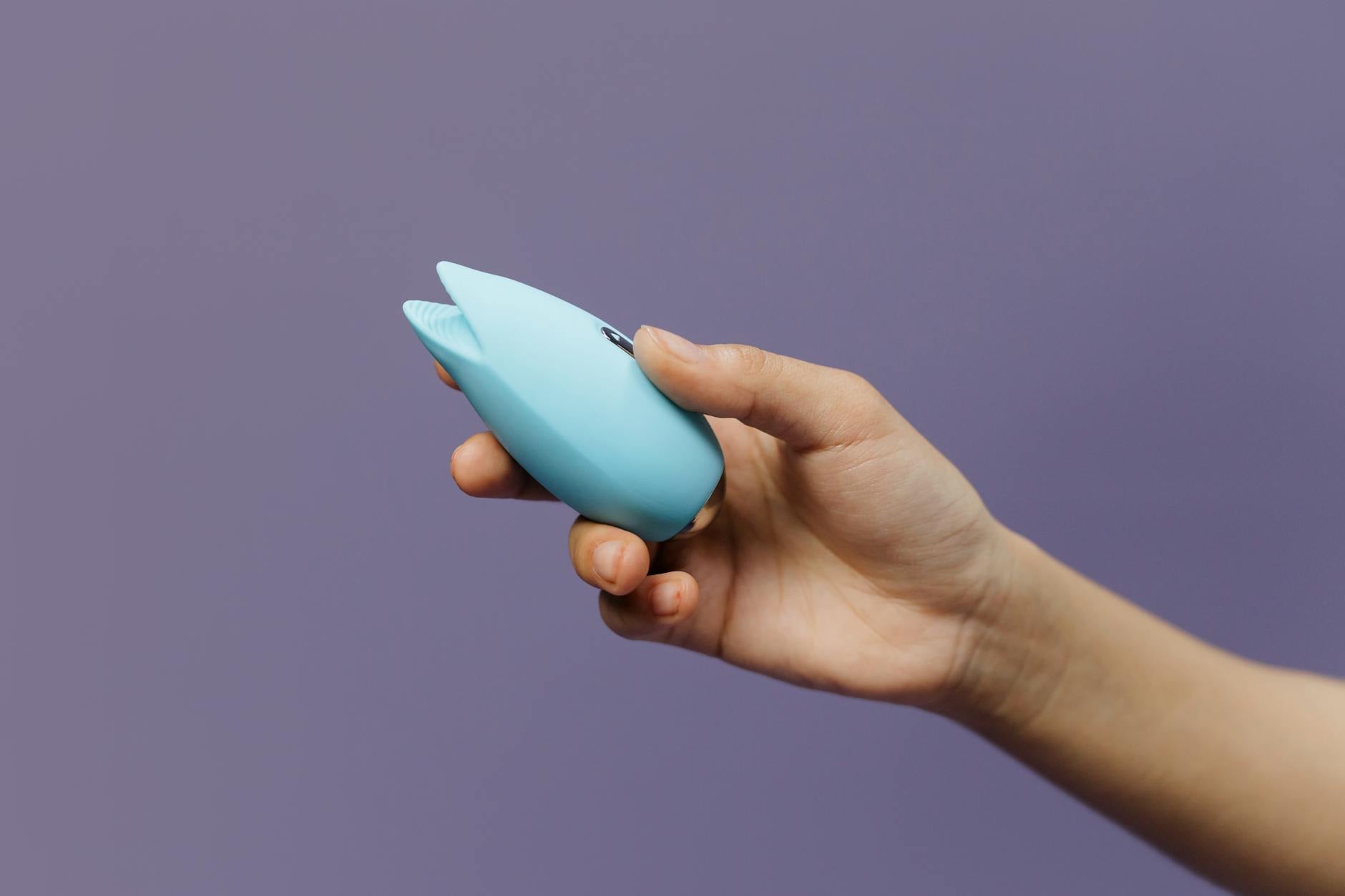
How to Use a Lemon Vibrator When Your Sensitivity Shifts During Perimenopause
Here's what nobody warns you about perimenopause: your pleasure settings change mid-game, sometimes week to week.
One month your usual routine feels amazing. The next, the exact same pressure on your clitoral vibrator makes you want to jump out of your skin. Not in the good way. Your body isn't broken. Your hormones are just rewriting what stimulation actually means to you, and a lemon vibrator's precision makes those shifts more obvious than ever.
I work with people navigating this all the time. The good news is that understanding what's happening physiologically makes the adjustment much simpler. You're not losing sensitivity. You're shifting it. And once you know how to read the changes, a lemon sucker becomes even more valuable than before.
What perimenopause actually does to sensitivity
Let's start with the mechanics. During perimenopause, estrogen doesn't drop steadily. It swings. One week it's high, the next it tanks, the week after it climbs again. This isn't a mood problem. It's a neurological one.
Estrogen affects how your clitoral nerve endings respond to stimulation. When it's high, your tissues are thicker and more elastic, which actually dampens sensation slightly. Your nerve endings are cushioned. When estrogen dips, tissues thin, and those same nerve endings become hypersensitive. The clitoris becomes more reactive to lighter touch.
This is why the lemon vibrator's suction-based stimulation works brilliantly during perimenopause. Unlike traditional vibrators that rely on direct friction, the lemon's air-pulse technology stimulates without requiring direct pressure. You can adjust the intensity without changing the mechanism itself.
But here's the part most articles skip: your arousal speed also changes. During the high-estrogen phase, you might need 10-15 minutes of warm-up before you're ready. During the low-estrogen phase, you might orgasm faster but feel less satisfied because the buildup was rushed. This isn't a bug. It's information.
Tracking your sensitivity cycle within perimenopause
Instead of assuming every session should feel the same, start mapping what you're actually experiencing. This sounds clinical, but I promise it's not. You're just keeping a tiny note (in your phone, a journal, wherever) about which settings felt good on which days.
For about three weeks, notice: Did the lemon vibrator feel too intense? Just right? Weirdly numb? What intensity level felt best? How long did warm-up take? Did your arousal feel like a slow build or a spike?
You don't need dates or detailed notes. Just patterns. After one cycle, you'll see something like: "First two weeks, setting 3 felt perfect. Last week, had to drop to setting 2 or it was overwhelming."
Once you see the pattern, you can actually lean into it instead of fighting it. Some people even find that the hypersensitive phase offers the most intense orgasms. You're not trying to make every session identical. You're trying to make every session work with your body as it actually is that day.
Adjusting your lemon vibrator settings through the month
If you're using a lemon clitoral vibrator during perimenopause, your settings might shift like this:
High-estrogen phase (usually days 1-14 of your cycle, if you still have a predictable one): Start at your usual setting. If it feels dull or you're not getting sensation, move up one level. Your tissues are cushioning the stimulation. You need more intensity to feel the same effect. But go slowly. Don't jump from setting 2 to setting 5. Your clitoris still has nerve density limits.
Transition phase (the unpredictable middle): This is where people get frustrated. Your sensitivity is bouncing. Some days you'll need to drop the intensity. Some days you'll need to increase it. The lemon vibrator shines here because you can make micro-adjustments without resetting your whole session. Instead of powering down completely, you might try a different pattern or pulse mode on the same setting.
Low-estrogen phase (usually days 15-28, or whenever symptoms peak): Your threshold drops. Settings that felt fine two weeks ago now feel sharp or overstimulating. Drop to a lower setting and increase your warm-up time instead. The goal is sensation without pain. If setting 1 feels too intense, you're not broken. Your clitoris is just hyperresponsive right now. That's your cue to slow down.
The suction-based design of the lemon means you can maintain rhythm and pressure while reducing intensity. This is different from a traditional vibrator, where lowering the speed sometimes feels like starting over. You keep the sensation, just dialed down.
Why warm-up time matters more now
One of the biggest mistakes people make in perimenopause is expecting the same five-minute warm-up to work year-round. It won't.
During high-estrogen phases, your clitoris fills with blood more slowly. You might need 15-20 minutes of light stimulation before you're fully aroused. During low-estrogen phases, arousal happens faster, but the sensation feels sharper and more concentrated if you skip warm-up. Jumping straight to full intensity feels like static instead of pleasure.
I recommend starting every session at setting 1 or 2 on your lemon vibrator, regardless of the day. Spend at least 10 minutes in this warm-up phase. This does two things. First, it lets your body signal what it actually needs today. Second, it builds arousal gradually so that when you do increase intensity, it feels like a natural progression instead of a jolt.
Warm-up also gives you time to notice what feels right in real time. Some days you'll be ready to climb to setting 4 by minute 8. Other days you'll spend the whole session at setting 2 and have an amazing orgasm anyway. Both are fine. You're listening, not forcing.
When to pause and reassess
If something hurts or feels genuinely wrong, stop. Perimenopause sometimes comes with localized pain, dryness, or nerve sensitivity that isn't solved by technique adjustments alone.
True discomfort (not just "it feels weird") is worth mentioning to a doctor. Genitourinary syndrome from shifting hormones is real, and it's treatable. A water-based lubricant can help some people. For others, topical vaginal estrogen or a conversation with a menopause specialist makes the difference.
But here's what I want to emphasize: painful sex during perimenopause is not something you have to live with. It's not a sign that your sexual life is ending. It's a signal that you need a different approach, maybe different tools, or sometimes a minor medical intervention. The lemon vibrator can absolutely be part of your pleasure routine during this phase, but only if the settings and setup actually work for your body right now.
The psychological piece nobody talks about
Perimenpause sensitivity shifts aren't just physiological. They're also psychological. Your brain is processing hormonal changes, often alongside actual life changes. Job stress, relationship shifts, aging parents, grown children. All of that affects arousal and sensitivity.
Sometimes what feels like a drop in sensitivity is actually a drop in mental space. You're in your head about the hormonal changes instead of present with the pleasure. Or you're frustrated that your body is changing and it's blocking actual arousal.
This is where taking the pressure off matters. Instead of trying to make each session identical or "prove" that perimenopause hasn't changed your capacity for pleasure, lean into curiosity. What does your body want right now? What intensity actually feels good? Can you spend a session just exploring instead of chasing a specific outcome?
A lot of people find that once they stop fighting the shifts and start adapting to them, the lemon sucker becomes even more satisfying than it was before. You're learning your body in a new way. That's not loss. That's depth.
Communicating the changes to a partner
If you're with a partner, this is a good time to have a straightforward conversation. Not a heavy one. Just factual.
"Hey, hormones are shifting, and my sensitivity is changing month to month. Some sessions I need lighter touch. Some I need more time to warm up. Here's what actually helps." You're giving information, not asking permission or apologizing.
If you're using a lemon vibrator during partner sex, you might find that you want to control it yourself during perimenopause instead of having a partner direct it. That's not rejection. It's you knowing what your body needs in real time. Your partner can participate in other ways. Hands elsewhere, verbal encouragement, or just being present. The point isn't for them to operate the device. The point is mutual pleasure.
A lot of couples find that this phase actually brings them closer. You're learning each other's bodies in a new configuration. That's an opportunity, not a threat.
FAQ: Perimenopause sensitivity and lemon vibrators
Why does my lemon vibrator hurt sometimes when it never did before?
Hormonal shifts thin and sensitize genital tissue. If pain is new, it's worth mentioning to a doctor to rule out infection or localized issues. But often, it's just that your threshold has temporarily dropped. Lower your setting, increase your warm-up time, and add lubrication if you're not naturally as wet as usual. If pain persists at the lowest setting, that's a signal to pause and check in with a healthcare provider.
Can I use the same setting all month if I just pay attention to warm-up time?
Sometimes, yes. Some people find that a longer warm-up makes a higher setting feel okay across the cycle. Others genuinely need to adjust settings week to week. The answer is in your own tracking. After one cycle of noting what feels good when, you'll have your answer.
Does perimenopause sensitivity mean I'm losing my sexual responsiveness permanently?
No. Perimenopause is a transition, not a permanent state. Your sensitivity is shifting, not disappearing. Many people report that once they understand the patterns, pleasure becomes more nuanced and actually deeper. You're also building a toolkit for understanding your body that serves you through menopause and beyond.
What if my lemon clitoral vibrator never felt intense enough before, and now even setting 1 is too much?
You might be experiencing breakthrough stimulation sensitivity combined with other changes like dryness or nerve reactivity. This is the moment to bring in lubrication, slow way down, and consider whether a different type of stimulation altogether might feel better right now. Some people switch between lemon vibrators and other tools depending on the week. That's totally valid.
Is it normal for my arousal to feel sharp or almost tingly instead of warm during low-estrogen phases?
Completely normal. Low estrogen can make sensation feel more electrical and less diffuse. It's not pain, but it's different. Some people find they prefer it. Others need extra warm-up time to make it feel more integrated. Try adding 5-10 minutes of hand stimulation before you bring in the lemon vibrator during those phases.
Should I tell my partner about these changes?
Yes, if you have one and you're sharing sexual time together. You don't need to make it a formal medical briefing. Just straightforward: "My body's changing with hormones, so some weeks I might want different things." Most partners appreciate knowing. It prevents them from misreading what's actually happening.
The long view
Perimenpause sensitivity shifts feel disruptive while they're happening. But they're also an invitation to get to know yourself more deeply. You're learning what your body actually needs, not what you assumed it needed. A lemon vibrator's precision makes that learning clearer and faster.
Your pleasure didn't go anywhere. It just changed shape. And once you understand the shape, you can meet it exactly where it is.
If you're navigating these shifts and want more personalized guidance, the team at Helo Nancy Shop can help. Or reach out at /contact if you have questions about how our lemon clitoral vibrators work through these kinds of changes.