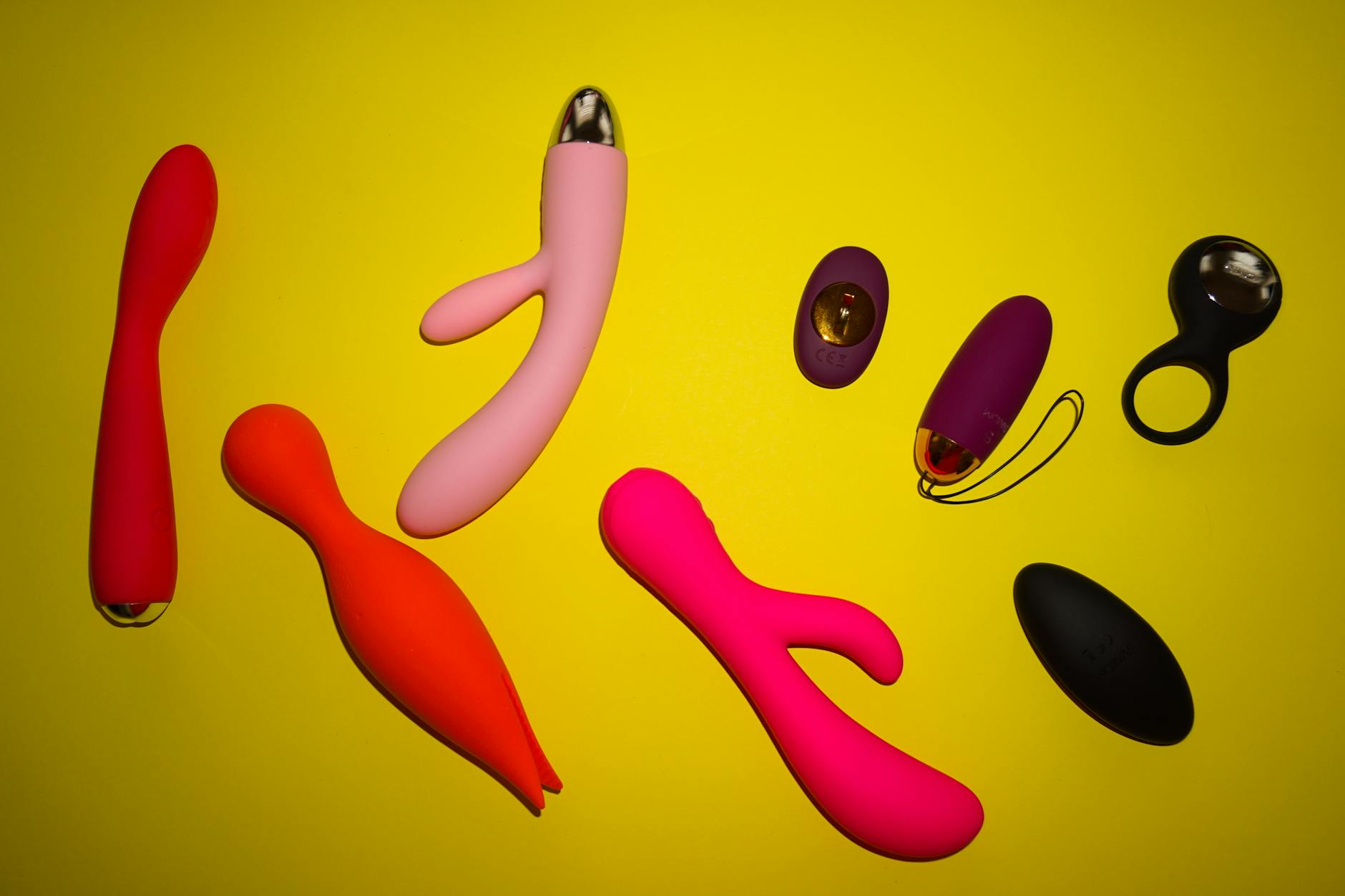
Let's be real about low sensitivity
You're not broken. Your body isn't punishing you. Low clitoral sensitivity or a feeling of numbness during touch is one of the most common friction points I see in my practice, and almost nobody talks about it openly. Most people suffer through it alone, assuming something is fundamentally wrong with their wiring.
It's not. Sensitivity can drop for a dozen reasons: medication side effects, hormonal shifts, nerve compression, repetitive overstimulation, anxiety, or simply the wear and tear of stress. The good news is that how you approach stimulation can change everything.
Why traditional vibrators often make it worse
A standard vibrator, even a good one, relies on direct repetitive friction against tissue. When sensitivity is already low, that approach demands more and more intensity to feel anything at all. You chase the sensation by turning up the power, the tissue gets irritated, sensitivity drops further, and you're in a feedback loop that ends with exhaustion.
That's where lemon vibrators, specifically the air-suction design of the Lem and similar clitoral vibrators, change the game. Instead of vibration, they use gentle pulsing suction. The sensation travels deeper into the nerve complex rather than relying on surface friction. For people with low sensitivity, this often works better because it engages different nerve pathways entirely.
Think of it this way: if vibration is knocking on the door, suction is inviting the whole nervous system inside.
How the lemon sucker mechanism works on numb tissue
When you first use a lemon vibrator or lem vibrator designed around suction, the sensation feels completely different because it's traveling a different route. Traditional vibrators work on the principle of repeated contact. Clitoral suction toys work on pressure and release, which activates deeper nerve endings that often remain responsive even when surface sensation has faded.
This matters clinically because the clitoris has roughly 8,000 nerve endings distributed across multiple layers. Low sensitivity usually affects the outermost layer first. Suction engages the deeper structures, which means you're literally accessing sensation that direct touch might have bypassed.
Start at the lowest setting on your lemon clitoral vibrator. Not because you're being gentle, but because the sensation will feel stronger than you expect. Many people are shocked by how much they can feel at pattern 1 or 2 when they've been chasing intensity with traditional toys for months.
The warm-up that actually resets sensitivity
Before you touch the lemon vibrator anywhere near your body, spend 10-15 minutes with no device at all. This sounds counterintuitive when sensation is already low, but here's what's happening: low sensitivity is often paired with anticipatory anxiety. Your nervous system is already braced for "this won't work," which further dampens physical response.
Warm-up does two things. First, it brings blood flow to the area, which genuinely increases sensitivity. Second, it resets the nervous system's expectation. You're not going from zero to device. You're going from activated arousal to device, which is a completely different starting point.
Use your hands, a partner's touch, or even fantasy without any toy. The goal isn't an orgasm. It's simply noticing what you can feel. When you notice something, pause there. Don't push toward more. Let your nervous system recognize that sensation is possible again.
Where to position the lemon vibrator for maximum effect
Not everyone responds to direct clitoral contact, and that's especially true when sensitivity is low. Try positioning your lemon sexual toy slightly off-center, against the hood rather than the glans itself. This distributes the suction pressure across a larger nerve area and often feels more intense than direct contact.
Another angle: many people find that pressing the Lem or similar lemon clitoral vibrator against the side of the clitoris triggers deeper sensation than straight-on approach. This isn't wrong technique. It's finding your architecture. Your body might respond better to lateral pressure or slight angles rather than direct stimulation.
Start with the toy barely touching. Yes, barely. Increase pressure gradually, and let your body tell you when more is good. If you're not feeling much at step one, stay there for 30 seconds before moving forward. Rushing kills the process.
The pattern and pacing strategy that works
When you're using a lemon sucker vibrator, the pattern matters more than raw power. Many clitoral vibrators offer multiple rhythms: steady pulse, escalating pulse, wave patterns. With low sensitivity, your goal is finding a pattern that feels like something rather than everything.
Start with the steadiest, most predictable pattern available. Your nervous system needs to recognize the rhythm before it can respond to it. After two to three minutes, if you're feeling something, try increasing the intensity one notch. If nothing has changed, try a different pattern instead.
Three to five minutes per pattern is a reasonable test window. Longer than that and you risk irritation. Shorter and you haven't given your body time to adjust to the signal.
What to do if sensation is still absent
If you've been warm, patient, and experimenting with position and pattern for 15-20 minutes with no feeling, pause. This isn't failure. Your body is telling you something important: either sensitivity needs more recovery time, or there's something else going on that needs attention.
Low sensitivity lasting more than a few weeks, or appearing suddenly without obvious cause, is worth discussing with a healthcare provider. Medication changes, hormonal shifts, nerve compression, or pelvic floor tension can all suppress sensation in ways that require professional support.
In the meantime, the thing that often helps most isn't more device experimentation. It's how you and a partner rebuild pleasure after a long relationship gap, which teaches the nervous system that sensation is safe again. Pleasure recovery is as much about emotional permission as it is about physical technique.
The paradox of trying harder
This is the part nobody wants to hear: often the barrier to sensation is the effort to feel sensation. You're focused so intently on the orgasm that your nervous system is locked in a defensive crouch. The suction mechanism of lemon vibrators actually helps here because it's novel enough to break the pattern of expectation.
If you find yourself white-knuckling it, waiting for feeling that isn't coming, stop the device. Breathe for 30 seconds. Sometimes stepping away for five minutes and restarting resets the entire system. Your body isn't being difficult. It's protecting you from the frustration of trying.
Expect that using a lemon clitoral vibrator with low sensitivity is slower than you might want. You're not just chasing an orgasm. You're rebuilding dialogue between your nervous system and your pleasure.
When sensation starts returning
The first sign of progress isn't usually a dramatic orgasm. It's a faint something. A subtle tingle. A moment where you think you might have felt something but you're not sure. That moment is real and important. Celebrate it. Pause and notice it rather than pushing forward.
As sensation returns over days or weeks, you'll likely find yourself needing less intensity from your lemon vibrator, not more. This is backwards from what low sensitivity made you expect, but it's how the nervous system actually works. As responsiveness rebuilds, you need less external stimulus to trigger response.
Sensation returning isn't about forcing more pleasure out of your body. It's about your nervous system remembering that pleasure is safe.
FAQ: Low sensitivity and lemon vibrators
Can low sensitivity be permanent?
In most cases, no. Sensitivity can recover with time, reduced stress, medication adjustment, or therapy. Some causes, like certain nerve damage, require specialist evaluation. But the majority of low-sensitivity experiences I see improve significantly once someone understands the mechanism and stops fighting their body.
Will a stronger lemon vibrator work better if I can't feel this one?
Not necessarily. Chasing more power is how most people end up in the numbness spiral. A stronger lemon sucker vibrator won't rewire your nervous system faster. What usually helps is patience, positioning variation, and sometimes professional support to identify what caused the sensitivity drop in the first place.
How long until I can feel normal again?
It varies wildly. Some people notice shifts in a few days. Others need weeks or months. This depends entirely on what caused the low sensitivity. Stress-related numbness often resolves quickly. Medication side effects take longer. Chronic conditions require ongoing management. The key is not expecting a timeline and celebrating small shifts when they happen.
Should I use a lemon clitoral vibrator or try a different toy?
Lem vibrators and similar suction-based clitoral vibrators are specifically good for low sensitivity because they engage different nerve pathways than traditional vibrators. If you've been using a standard vibrator and nothing has changed, switching to a lemon sexual toy is absolutely worth trying. It's not that traditional toys are bad. They're just designed for a different kind of sensation.
Is numbness during sex normal after starting new medication?
Yes, and it's one of the most underreported side effects. Antidepressants, antihistamines, blood pressure medications, and hormonal contraceptives can all affect sensitivity. If the timing lines up with a medication change, that's worth discussing with your prescriber. Sometimes adjusting dose or switching to a different option helps. Sometimes you need strategies specifically designed to work around medication side effects.
Can a partner help me regain sensation?
Absolutely. Often the most effective path is combining solo exploration with partner play. Your partner can provide different kinds of touch and pressure than you might try alone. The emotional safety of being desired also matters. Anxiety about low sensitivity often feeds the cycle. A partner who understands what's happening can help break that loop.
What comes next
Using a lemon vibrator when sensitivity is low isn't about optimization. It's about permission. Permission to feel what you can feel. Permission to go slowly. Permission to stop when something isn't working and try something else. Your body isn't broken. It's waiting for you to find the right approach.
Start with the lowest setting, the gentlest pressure, and the longest timeline you can manage. Your pleasure will return. It just might not look like you expected.