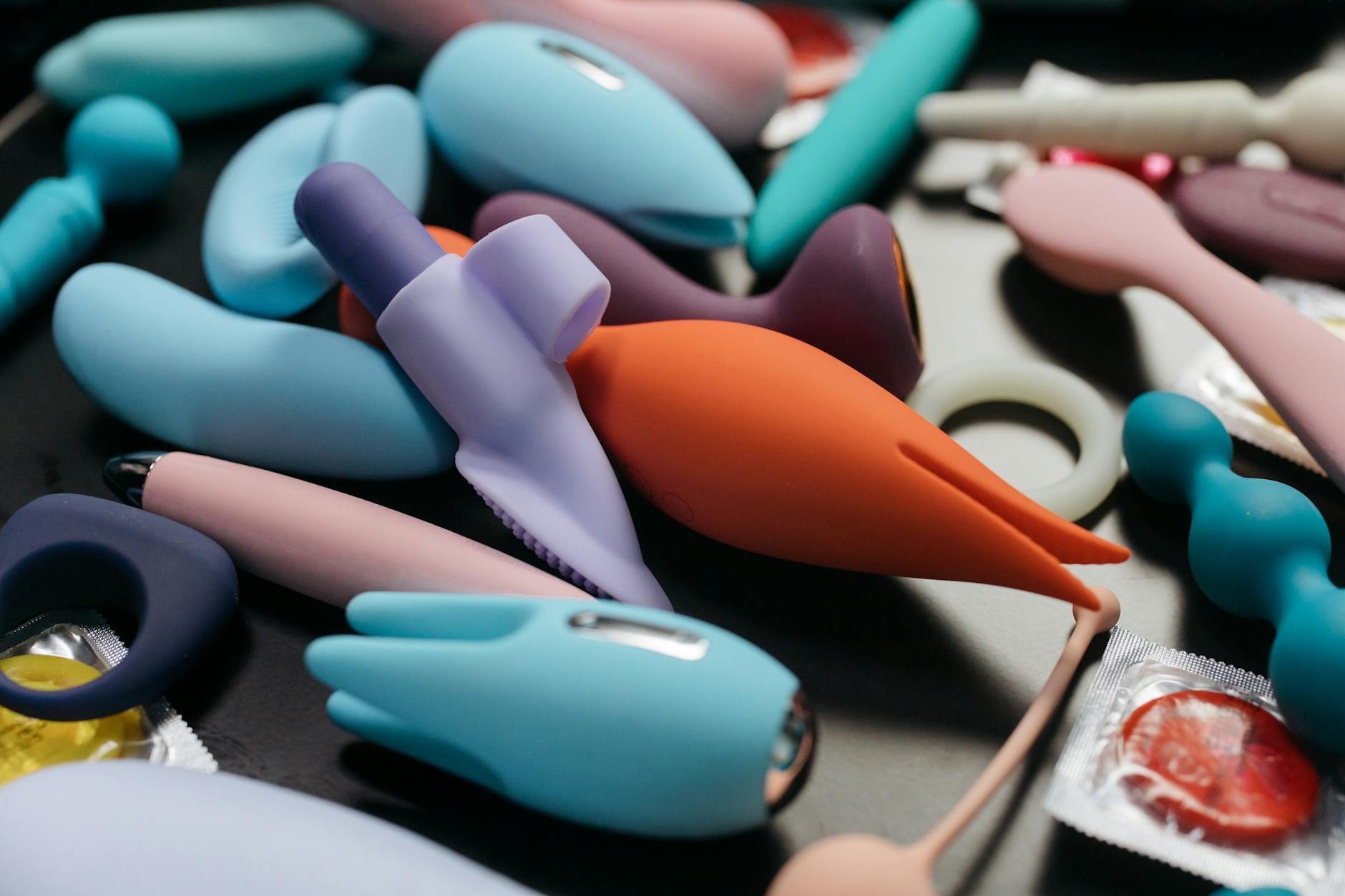
Let's talk about the medication nobody warns you about
Your doctor didn't mention it. The pharmacy tech definitely didn't. But somewhere between week two and week four of a new SSRI, antihypertensive, or hormonal contraceptive, you realize something has shifted. The spark isn't there. Or it's there, but muted, like watching your favorite song through soundproof glass.
This isn't in your head. It's biochemistry, and it's wildly common. What's less common? Anyone actually talking about how to navigate pleasure through it.
Which medications actually mess with desire and sensation
SSRIs and SNRIs (the antidepressants most commonly prescribed) hit your dopamine and serotonin systems. Dopamine drives desire. Serotonin affects orgasm quality. The trade-off saves your mental health. But your libido pays a price.
Birth control shifts estrogen and progesterone, which changes tissue thickness and lubrication the same way menopause does, except you're potentially cycling through this for decades. Some women report no change. Others find desire tanks or sensation becomes distant.
Blood pressure medications, particularly beta-blockers, can reduce blood flow to the clitoris. Beta-blockers are excellent for heart health. But they're also excellent at making arousal feel slow or incomplete.
Hormone replacement therapy, ironically, can cause the same side effects as the hormones it replaces or balances. Thyroid medication, antipsychotics, and even some antibiotics can trigger shifts in desire or arousal response.
The pattern: your medication is doing exactly what it's supposed to do (keeping you mentally or physically healthy). Your pleasure is collateral damage. That doesn't mean it has to stay that way.
Why a lemon vibrator works differently when medication changes sensation
Here's the mechanism. When medication reduces clitoral sensation or blood flow, traditional vibrators (bullets, wands, most conventional toys) rely on frequency and direct pressure to create sensation. If your nerves are already muted by chemistry, adding more speed doesn't always help. It just feels numb.
A lemon clitoral vibrator works through suction and pulsing, not pure vibration. The suction pulls blood into the clitoris and stimulates the nerve endings through a different neural pathway than traditional vibration does. It's like switching from knocking on a door to gently pulling it open.
For people on SSRIs or other medications that dull sensation, this shift in stimulation type often makes the difference between "I can't feel anything" and "Oh, that actually works." The lem vibrator specifically uses gentle air-pulse technology that builds sensation gradually rather than assaulting it.
Starting over with sensation after medication changes
When medication first shifts your pleasure, the temptation is to push harder. More pressure, higher intensity, longer sessions. That usually backfires because you're essentially chasing a sensation that's chemically unavailable at that intensity.
Instead, start lower and slower than you think you need.
With a lemon clitoral vibrator, begin on setting one or two. Spend 15-20 minutes on warm-up alone. This isn't laziness. You're retraining your nervous system to recognize pleasure signals that medication is dampening. Your brain needs time to register "this feels good" when the chemical signal is weaker.
Use lubrication, even if you didn't before. Medication-induced changes often reduce natural lubrication, and adding it isn't admitting defeat. It's removing one variable so you can isolate what the medication actually changed versus what dry friction is masking.
The conversation you might need to have with your prescriber
Here's what most people skip: telling their doctor about this side effect.
You might think "they're prescribing me an antidepressant, not a pleasure drug, so this doesn't matter to my care." Wrong. Sexual side effects from medication are information your doctor needs. Why? Because there are often alternatives.
If you're on an SSRI and it's tanking your libido, your doctor can switch you to a different class of antidepressant, adjust timing (taking it after sex instead of before), or add a medication that counteracts the sexual side effect. Some of these swaps are simple. Some take trial and error.
For birth control, there are formulations with different hormone types or doses that hit desire less hard. For blood pressure meds, there are alternatives in the same class that don't reduce blood flow as severely.
The point: you don't have to choose between mental health and pleasure. Sometimes you do need to adjust the approach to get both.
Practical steps for using a lemon vibrator through medication shifts
First, know your baseline. Before switching meds or starting something new, explore what sensation feels like to you normally. This isn't about orgasm counts. It's about noticing where you feel pleasure, how intense it is, how quickly arousal builds. This memory matters when things change.
Second, give it time. Medication changes don't stabilize overnight. Most sexual side effects take 4-8 weeks to fully develop or, if you're switching, to improve. Don't abandon your tools after two weeks.
Third, adjust expectations temporarily. If you normally orgasm in 10 minutes and now it takes 25, that's not a failure. That's data. Work with your lemon clitoral vibrator at your current pace, not the pace your body used to move at. You'll likely regain speed as your system adjusts to the new medication or as your prescriber makes tweaks.
Fourth, use a lube that won't degrade your toy. Water-based is safest for silicone lemon vibrators. Silicone-based lubes can damage silicone toys, so stick with what works. Extra lubrication isn't a crutch. It's a legitimate tool when medication reduces natural lubrication.
Fifth, consider timing. Some people find that if they take certain medications at night instead of morning, or after sex instead of before, the sexual side effects ease. Your pharmacist can tell you if timing shifts are safe for your specific medication.
When pleasure stays muted (and what to do about it)
Sometimes medication changes are permanent, or the side effects don't fade. That's the moment to loop back to your prescriber and say: I've adjusted, I've waited, I'm still experiencing sexual side effects. What are my options?
Those options might include switching medications, adding another medication to counteract the effect, adjusting dosage, or in some cases, accepting that this particular medication is the right one for your health overall and finding ways to enjoy pleasure that work within this new reality.
A lemon clitoral vibrator isn't a cure for medication side effects. But it's often a workaround that makes pleasure accessible again while you and your doctor figure out the bigger picture.
And sometimes that workaround is enough to let you feel like yourself again.
People also ask
Do SSRIs permanently damage sexual pleasure?
No. Sexual side effects from SSRIs are real, but they're also potentially reversible. For some people, side effects fade after 8-12 weeks as the body adjusts. For others, they persist, but they often improve with dosage adjustments, timing changes, or switching to a different class of antidepressant. Your prescriber has options. You're not stuck.
Can you use a lemon vibrator while on antidepressants?
Absolutely. There's no interaction between lemon vibrators (or any sex toy) and medication. The vibrator isn't interacting with the chemical. It's just using a different stimulation method to work around the sensation dulling that the medication might cause. Many people find that a clitoral vibrator is actually more effective for medication-induced numbness than traditional toys.
How long does it take for medication to affect your sex drive?
It varies wildly. Some people notice changes within days. Most notice them within 2-4 weeks. For some, it takes 6-8 weeks for the full effect to show up. The good news: if you're experiencing side effects, your prescriber probably won't ask you to white-knuckle through longer than 8-12 weeks before exploring alternatives. Sexual health is part of overall health.
Will switching birth control help with sexual side effects?
Often, yes. Different formulations of birth control have different hormone doses and types, which affect libido differently. A lower-dose pill, a different type of progestin, or even a non-hormonal method might work better for you. Your gynecologist can discuss options and might suggest trying a different formulation to see if it improves desire.
Is it normal to need more stimulation after starting medication?
Completely normal. Medication that affects dopamine or blood flow often changes how quickly and intensely you feel pleasure. This doesn't mean your capacity for pleasure is broken. It means the threshold has temporarily shifted. Using a tool like a lemon clitoral vibrator that stimulates through suction as well as vibration often helps bridge that gap.
What should I do if my doctor dismisses my sexual side effects?
Find a different doctor. Sexual health is health. Any prescriber who dismisses medication side effects affecting your quality of life is not equipped to care for you comprehensively. Many primary care doctors have limited training in this area. Consider asking for a referral to a sexual medicine specialist or finding a prescriber who specializes in your condition. Your pleasure matters.
The bottom line
Medication side effects on pleasure are real, common, and almost never discussed before they happen. That silence makes people feel broken or ashamed. You're neither. You're taking care of your mental or physical health, and that sometimes means negotiating with your body about pleasure in the short term.
A lemon clitoral vibrator is one tool in that negotiation. So is honest conversation with your prescriber. So is patience while your body adjusts. And sometimes, it's all three.
Your pleasure matters enough to ask questions, make adjustments, and try different approaches. That's not selfish. That's care.
If you're struggling with how medication is affecting your intimate life, let's talk through it. Reach out to Hello Nancy to explore what might work for your body right now.