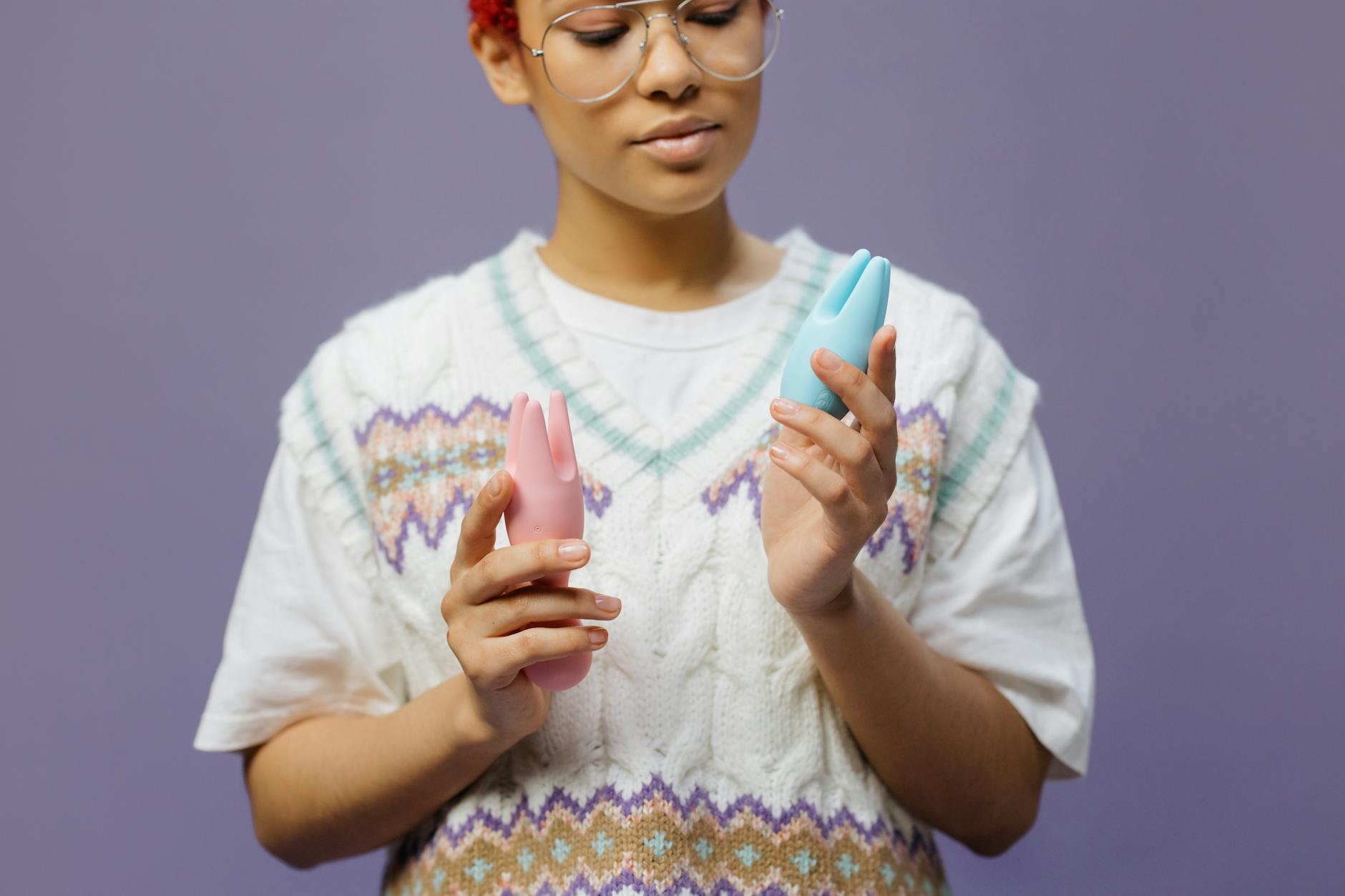
The insecurity is real (and it's not about the toy)
Let's cut through the noise. Your partner doesn't actually think a lemon vibrator will steal their job. What they're hearing, underneath the surface, is: "You're not enough." That's not necessarily what you mean. But that's the fear living in their nervous system.
Partner insecurity around toys is one of the most common relationship friction points I see in my practice. And here's what I've learned: the toy becomes the lightning rod for a much older conversation. Maybe about feeling desired. Maybe about being chosen. Maybe about whether sex is something they get to participate in or something that's being done while they watch.
Understanding this distinction changes everything about how you approach the conversation.
Why they're actually scared
Three layers of fear usually stack up here:
First, there's the performance anxiety. Your partner has internalized a story that their body, their touch, their effort should be enough to bring you pleasure. If you need a device, they read that as failure. They don't yet understand that a lemon vibrator isn't a replacement for what they do. It's an amplifier. It's access to a different kind of stimulation entirely.
Second, there's the visibility piece. Bringing a toy into the room makes pleasure explicit. When sex happens with only bodies, there's a kind of unspoken agreement that what matters is connection and desire. A vibrator puts stimulation front and center. For some partners, that feels exposing. It makes the mechanics of pleasure visible, and visibility can trigger shame.
Third, there's often a story about what it means to want more. In long-term relationships especially, wanting anything different sometimes gets read as "You're bored with me." Or "You're not satisfied." Or "You want someone else." None of those things are true when you introduce a lemon clitoral vibrator. But that's the narrative your partner might be running.
Addressing the insecurity means talking about what's actually underneath, not defending the toy.
The conversation before the vibrator ever enters the room
Timing matters here. Don't introduce the lemon vibrator during sex. Don't spring it on them in the moment. Have the conversation when you're both clothed, calm, and not about to get vulnerable.
Start with this: "I want to talk about something that matters to me. This isn't about you or whether I'm happy with you. It's about me and what my body needs." Already, you're separating their worth from your pleasure needs.
Then be specific about what a clitoral vibrator does that bodies alone cannot. The lemon vibrator works through air-pulse suction, which stimulates the clitoris differently than touch or penetration. You can't get that sensation from a partner. It's not a comparison. It's a different experience entirely. Like the difference between listening to a song with headphones versus in a concert hall. Both are the song. They're just different.
Here's what I recommend saying: "When I use a lemon vibrator, I get a kind of stimulation that helps me understand my own body better. It actually helps me be more responsive with you, not less. I'm not asking you to leave the room. I'm asking you to be part of it."
Notice what you're doing: you're making the vibrator a tool for deepening what you already have, not a replacement for it.
Building safety into the introduction
If your partner agrees to try it together, your job is to make that first experience feel collaborative, not threatening. Here's how:
Let them hold the lemon vibrator first. Let them see how it works, feel the vibration against their own hand, understand what the sensation is. Demystification alone kills a lot of the fantasy narrative they might be running.
Then, when you do use it together, narrate what you're experiencing. Not dirty talk. Just simple truth. "That feels so different from when you touch me. The suction is pulling sensation inward. I love this." When they hear that you're having a completely new experience rather than a comparison, insecurity often begins to soften.
Invite them to use the lemon vibrator on you, if they're comfortable. This flips the narrative from "I need this toy because you're not enough" to "I want us to explore this together." It makes the toy a bridge, not a barrier.
If they're not ready to touch it or be involved, that's okay. But make it clear: "This is for me, and I'd love for you to be here while I do this. I want you to see what brings me pleasure. That's intimate too."
Managing the fear while you're actually using it
Even after the conversation, the first few times you use a lemon vibrator with a partner around, their nervous system might still react. Defensiveness might flare up. They might make a joke that lands wrong, or they might go quiet.
In those moments, your job is to stay grounded and not over-explain. "I'm enjoying this. I'm glad you're here. I love you." That's enough. You don't need to convince them repeatedly. You just need to keep showing them, through your actions and your presence, that this is not about rejection.
One thing I've noticed works: sometimes the partner is less insecure about the vibrator itself and more worried about being left out of the pleasure. If that's your person, ask them how they want to be involved. Do they want to watch? Do they want to touch you at the same time? Do they want to control the intensity? Giving them agency often dissolves the fear.
Reframing for the long game
After a few experiences, the insecurity usually shifts. Your partner will likely notice that you're more relaxed, more present, more orgasmic. That's hard to argue with. The narrative of "the toy is replacing me" becomes obviously false because they can see that you're happier, your confidence is up, and you're actually initiating more.
There's a hidden benefit here for your partner too. When you're satisfied, the pressure lifts. They no longer have to be your sole source of pleasure. That's actually a massive relief for most people once they get there. It takes the burden off them to perform, to last longer, to figure out exactly what you need. You're showing them.
Over time, many couples find that introducing a lemon vibrator actually deepens their sex life. The insecurity that felt like a barrier becomes a conversation starter. Instead of assuming what your partner wants or needs, you're asking. You're exploring together. That's intimacy.
When insecurity doesn't soften
If your partner continues to resist or becomes hostile about the idea of you using a vibrator, that's worth examining more carefully. Sometimes partner insecurity around pleasure is connected to deeper control issues or to their own unresolved beliefs about sexuality.
If that's happening, consider having a conversation outside of sex. "I notice you get upset when I want to explore my own pleasure. I care about you and I also need you to be okay with this part of me. Can we talk about what's really coming up for you?" You might need a couples therapist to work through it together. That's not a failure. That's respect.
You deserve a partner who can eventually get comfortable with your sexual autonomy. A partner who cares enough about your pleasure to work through their own fear. The lemon vibrator is just the vehicle. The real conversation is about whether you both believe your pleasure matters.
The FAQ section
Will using a vibrator make my partner feel emasculated?
Maybe initially. But masculinity that depends on being someone's sole source of pleasure is fragile. A vibrator doesn't threaten real confidence. What it does is invite your partner to be part of something new with you, rather than be replaced by it. The tool only becomes threatening if you frame it that way. If you frame it as "this is a way we can both get what we need," most partners eventually come around.
How do I explain that the lemon vibrator does something different, not better?
This is the key reframe. Say exactly that: "It does something different. The sensation is completely unlike what your body can create. It's not better or worse. It's just different. Like the difference between hearing a song played on piano versus guitar." Specificity works because it proves you've actually thought about this and aren't just running away from your partner.
What if my partner wants to control when I use the vibrator?
That's worth examining carefully. There's a difference between "I'd prefer if we use it together" and "You can't use it without my permission." One is collaborative. One is controlling. You deserve autonomy over your own body and pleasure. If your partner is trying to gate-keep your access to a lemon vibrator, that's a sign of a deeper dynamic worth addressing, ideally with a professional.
Can we use the lemon vibrator together in a way that feels good for both of us?
Absolutely. Many couples find that watching a partner use a vibrator is more intimate than they expected. Some partners enjoy controlling the intensity or the pattern. Some use it on their partner and discover a new way of touching. Some use it side-by-side while also being intimate together. The permission to experiment together is often what softens the initial fear.
What if I introduce a lemon vibrator and they feel humiliated?
That's a strong reaction, and it usually signals something deeper than the vibrator itself. Humiliation around pleasure often stems from family stories, religious shame, or past experiences. Your partner might need individual support to work through that. You can't fix their relationship with pleasure for them. You can only honor your own needs and invite them to join you on that journey. If they're not able to, that's information about the relationship.
How long before they actually feel okay with it?
There's no timeline. Some partners are curious immediately. Some need weeks or months of you calmly, consistently using the vibrator without making a big deal of it before they soften. Some never fully embrace it but learn to accept it. What matters is that you're moving toward acceptance, not resentment. If after several months they're still actively hostile, that's a couples conversation worth having with a professional.