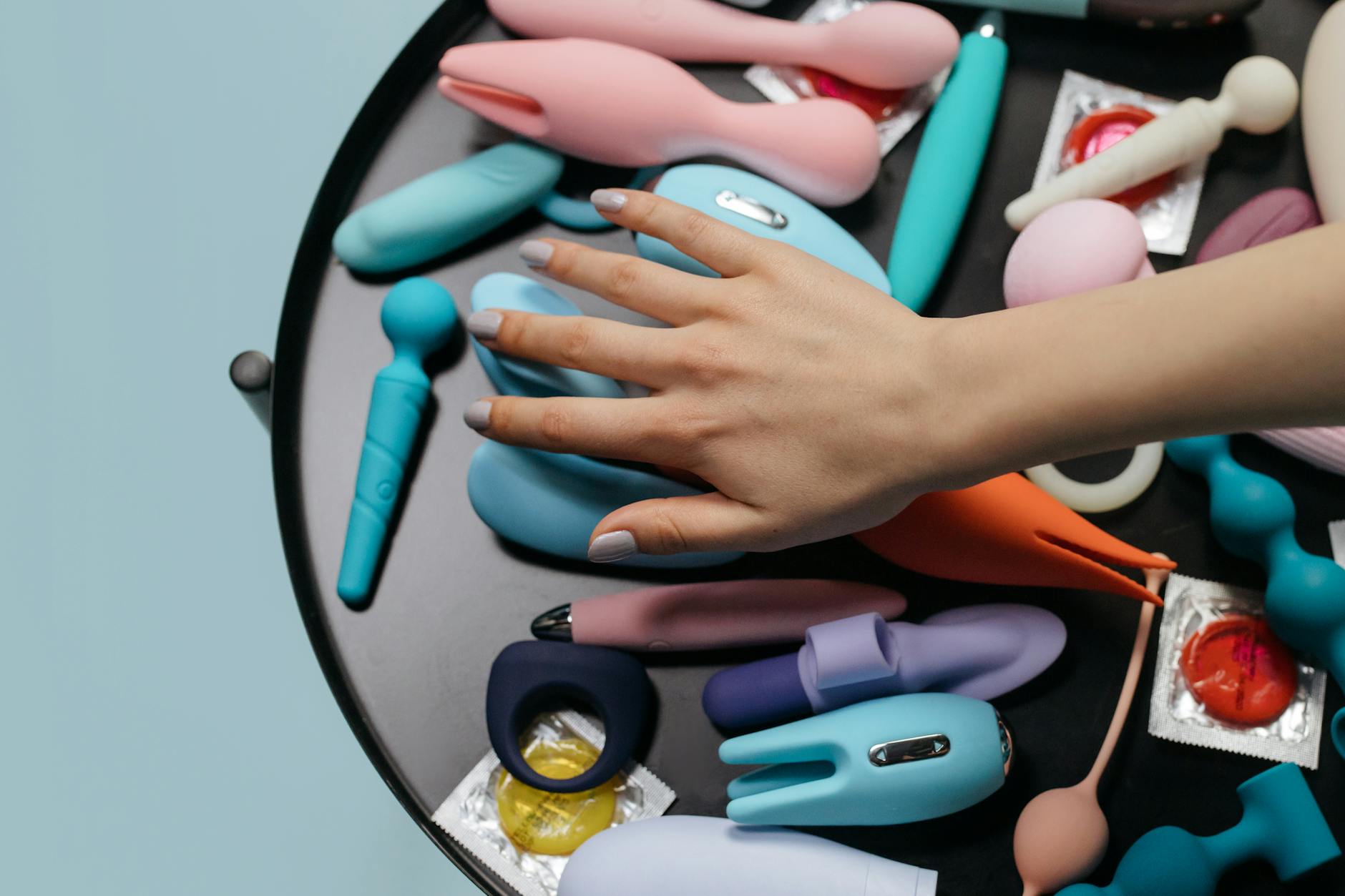
Let's name the actual problem
Here's what nobody says out loud at dinner parties: penetration and clitoral stimulation live on different timelines. One partner is wired to orgasm from penetration alone. The other needs direct clitoral contact to get there. Both want to come together. Both are frustrated. Both think the other one is doing something wrong.
They're not. This is anatomy and neurology, not a character flaw.
The fix isn't communication (though you'll need that too). The fix is a tool that lets you do both things at once without anyone sacrificing.
Why penetration and clitoral orgasms feel incompatible
They're triggering different nerve pathways. The vaginal canal has fewer nerve endings than the clitoris. Orgasms from penetration tend to come from deeper pressure and a particular angle. Clitoral orgasms come from direct, sustained stimulation of the external clitoris. Your partner can thrust for twenty minutes and feel amazing. You can be turned on and untouched at the clitoris and feel... nothing.
Then someone feels resentful. Then someone performs. Then both of you stop enjoying it.
A lot of couples try to solve this by the woman getting on top (which can help because you control the angle and depth of penetration). But being on top also means you have to do most of the physical work. By the time your clitoris is properly stimulated from the new angle, your legs are shaking from exhaustion.
Or you use your hand to stimulate your clitoris while your partner penetrates you. This works. But it's awkward, your hand gets tired, and your partner can't move the way they want to without jabbing your arm.
This is where a lemon vibrator actually solves the geometry problem.
How a lemon clitoral vibrator changes the equation
The lemon sucker design is specific: it's a handheld tool with a small opening you fit over your clitoris. Unlike a traditional vibrator that requires you to rub it back and forth, a lemon vibrator uses a suction or pulsing motion. You position it, turn it on, and it does the work.
This means while your partner penetrates you, your lemon vibrator is handling clitoral stimulation independently. No hand fatigue. No collision injuries. No stopping to reposition.
Better still, because it doesn't vibrate in a way that requires directional movement, your partner can move the way their body naturally wants to. They're not dodging your vibrator. They're not waiting for you to finish before they move. Both of you are getting what you need simultaneously.
The lem vibrator from Helo Nancy Shop, for example, sits flush against the clitoris and does everything from there. Your partner can thrust away while you're holding it (or you're holding it, or you've positioned your body so the angle works). No interference.
The positioning that actually works
There are three main positions that work well with a lemon vibrator and penetration:
Position one: You on your back, them between your legs. Hold the lemon vibrator against your clitoris yourself. Your partner penetrates however feels natural to them. You control the vibrator's intensity and angles. This is the most ergonomic if you're tired or you have any lower back issues.
Position two: Them on their back, you straddling them. You can hold the vibrator and control depth and rhythm. This gives you more autonomy over the penetration itself, which often helps with clitoral stimulation because you're not stuck with whatever angle feels good for them.
Position three: Spooning, penetration from behind. Your partner enters from behind while you hold the vibrator to your clitoris. This is good for partners who like deeper angles, and it's the most intimate feeling for a lot of people because your bodies are close.
The key is finding a position where the vibrator isn't in your partner's way and where you can reach it easily. Test, adjust, repeat. What feels great on Tuesday might feel awkward on Thursday, and that's fine.
The timing conversation you actually need to have
Before you use a lemon vibrator with a partner, you need one specific conversation. Not "Do you feel weird about me using a vibrator?" (though you can have that too). This one: "How long do you usually last, and how long do I usually need?"
This is unsexy and specific. It's also the difference between both of you coming and both of you frustrated.
If your partner typically lasts fifteen minutes and you need twenty-five minutes of clitoral stimulation to reach orgasm, you have a timing gap. The lemon vibrator can help close it, but you need to know you have a problem first.
Some couples find that using the vibrator before penetration helps. You spend five to ten minutes with the lemon vibrator, get to a certain point of arousal, then your partner enters. Then you use the vibrator during penetration to push over the edge. This is often faster than trying to do everything simultaneously.
Other couples find that the vibrator during penetration is faster because the combination of sensations is intense enough that timing becomes less critical.
There's no universal right answer. But you can't know what works without saying the numbers out loud.
Managing the mental stuff
Here's the part that kills more relationships than any physical incompatibility: the person who prefers penetration often interprets clitoral vibrators as rejection. "You need a vibrator to come with me" gets translated to "I'm not enough."
That's a real feeling. It's also not true, and it deserves to be addressed separately from the physical logistics.
A lemon vibrator isn't a prosthetic for a missing skill. It's not evidence that your partner isn't turning you on. It's a tool that lets two different bodies do two different things at the same time. People with penises use vibrators during sex with partners. That doesn't mean their partners aren't enough. It means their nervous system works a certain way, and they deserve pleasure.
Same applies here.
The conversation isn't "I need this because you're not good at sex." It's "I need this because my body requires direct clitoral stimulation to come, and I want to come with you inside me, and this is the tool that makes both things possible."
The rest is his or her or their work to process.
When to introduce it and how
Don't surprise someone with a vibrator mid-sex. Talk about it first. Explain what a lemon vibrator is, why you're interested in trying it, and what you think it will do for both of you.
If they're resistant, ask what they're worried about specifically. Not "Why don't you want me to enjoy sex?" but "What's the concern?" Maybe they think it will take over the experience. Maybe they feel insecure. Maybe they genuinely don't want to interrupt the rhythm. All of those are addressable if you know what you're actually arguing about.
The first time you use it, keep expectations loose. You might feel awkward. The positioning might be off. The timing might be weird. None of that means the tool doesn't work. It means you're learning something new together, and learning is uncomfortable.
Try it once. See how it feels. Adjust. Try again.
The body-neutral reality
There's a subset of partners who genuinely don't care whether you use a vibrator, as long as you're present and engaged. There's another subset who finds the addition of a lemon vibrator incredibly hot because they can feel you getting closer to orgasm and can watch you experience intense pleasure.
Then there are partners who feel threatened, insecure, or left out. Some of that is their own work. Some of it is something you two need to navigate together.
What won't happen: your partner will become redundant because you have a vibrator. The clitoris isn't the only zone that matters. The emotional and physical intimacy of being inside someone, of moving together, of watching them come. Those things remain. The vibrator isn't a replacement for your partner. It's an addition to what your partner already does.
Make sure you say that explicitly. Not once. Repeatedly, if you need to.
When it still isn't working
If you've introduced a lemon clitoral vibrator, you've had the timing conversation, you've tested positioning, and you're still not coming together, the problem might not be physical anymore. It might be emotional.
Sometimes the issue is that your partner feels truly hurt or rejected, and a vibrator doesn't fix that. Sometimes the issue is that you're too in your head to orgasm, and adding a tool doesn't change that.
That's when you need actual conversation, and possibly someone trained to help you have it. A therapist, a sex coach, or even a relationships educator. The good ones don't need to know the details of your sex life. They just need to help you talk about it without one person shutting down and the other person attacking.
A lemon vibrator is a tool. It's a good one. It solves the geometry problem beautifully. But tools can't fix communication problems or deep resentment. Those need actual human work.
Quick troubleshooting if positioning is awkward
Some bodies just don't align the way the internet promised. If standard positions don't work: try angling your hips differently. Try holding the vibrator at a different angle (not just straight on). Try adding a pillow under your lower back. Try having your partner stay still while you focus on the vibrator sensation. Try using the vibrator before penetration and then switching it off once your partner enters.
Flexibility (both physical and mental) matters more than following a script.
FAQ
How do I know if a lemon vibrator is right for my situation?
If your partner comes from penetration and you need clitoral stimulation, and you want both things to happen during partnered sex, then yes. If you're currently frustrated because one of you is always waiting for the other one to finish, or if you're skipping clitoral stimulation entirely because it kills the penetration momentum, a lemon vibrator specifically designed for partnered use is genuinely useful.
Will using a lemon vibrator during sex make my partner feel inadequate?
Maybe. Some people do interpret it that way initially. That's why the conversation matters more than the tool. If your partner feels secure in the relationship and understands that you need direct clitoral stimulation to orgasm (which is biological, not a reflection on them), they usually come around. If they don't, that's something to explore, but it's not a vibrator problem. It's a communication or insecurity problem.
Can I use a lemon sucker vibrator if I have a smaller or larger body?
Most lemon vibrators are one-size-fits-most. The body positioning you use matters more than your body type. If standard positions aren't working, try modifying the angle of your pelvis, adding pillows, or trying different positions entirely. The tool is flexible. Your setup should be too.
What if the vibrator pattern is too intense for penetration?
Most good lemon vibrators have adjustable intensity. Start on a lower setting during penetration. If it's still too intense, you might use it before your partner enters, bring you closer to orgasm, then switch to a lighter pattern once they're inside you. Or use it after they've come, if they're comfortable with that.
Is there a "best" lemon vibrator for partnered sex?
Look for one with adjustable intensity, a design that sits flush against the clitoris without protruding (so it doesn't interfere with penetration), and quiet enough that you can still hear each other. The lem vibrator from Helo Nancy Shop is designed specifically for this scenario. But the real test is whether it fits your body and your partner's comfort level.
What if we try this and it doesn't help?
Then you have a different problem than mismatched orgasm mechanics. You might have a mismatch in desire frequency, a communication issue, or something deeper emotionally. A vibrator can't fix those. A conversation with a therapist or couples counselor can.