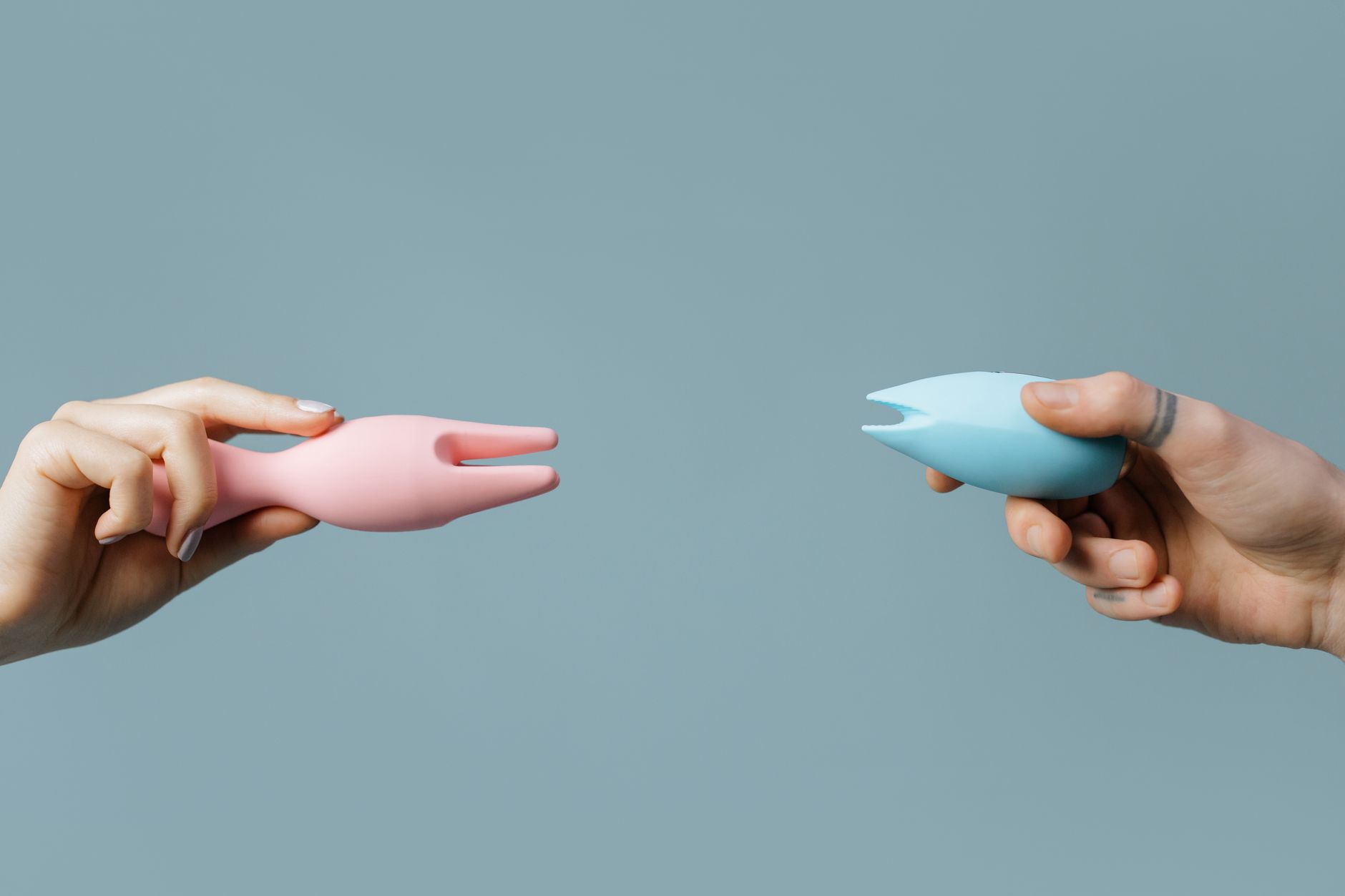
Let's talk about the plot twist nobody expects
Menopause gets sold as a story about loss. Drier tissue, lower libido, muted sensation. And yes, that happens for some people. But here's what the mainstream narrative skips over: for others, particularly in the first one to three years after your last period, clitoral sensation can actually become sharper, more concentrated, sometimes almost uncomfortably intense. Your lemon vibrator goes from "nice" to "whoa, that's a lot" overnight.
This isn't a problem. It's information. And it changes how you'll use your clitoral vibrators going forward.
Why heightened sensitivity happens during menopause
The usual story is that dropping estrogen thins tissue and dampens sensation. That's partly true. But estrogen also used to diffuse sensation across a wider area of tissue. As that tissue thins, the nerve endings that remain are now sitting closer together, and stimulation can feel concentrated rather than diffuse.
Add in another factor: the pelvic floor. As estrogen drops, many people unconsciously tighten their pelvic floor muscles as a protective reflex. That tension actually amplifies sensation because the muscles pull tissue tighter around the nerve clusters. You're not losing sensitivity. You're experiencing it in a more condensed zone.
There's also a hormonal shift that doctors don't talk about much. Some people experience a temporary spike in circulating testosterone relative to estrogen in early menopause, before both hormones settle lower. Testosterone sharpens sexual sensation. So you might have a window of heightened responsiveness before things level out.
The result: your lemon vibrator, which was perfect at medium intensity for years, now feels like it's turned up to eleven.
How your lemon clitoral vibrator might feel different
Three specific changes people report during this phase:
First, the suction or pulsing sensation that used to feel like a gentle wave now feels more like a direct knock. The Lem or any lemon sexual toy that uses air-suction technology concentrates stimulation on a smaller area, so if your nerve sensitivity is already heightened, the feeling intensifies fast.
Second, building arousal takes less time, which sounds great until you realize you're hitting peak sensation before you're mentally ready. Your body goes from zero to sixty in three minutes instead of fifteen. This can feel jarring if you're used to a slower ramp.
Third, orgasms might feel sharper, more pointed, sometimes almost uncomfortable if you're not expecting the intensity. Some people describe it as less of a wave and more of a focused pulse or spike. That's your concentrated nerve endings doing their thing.
The technique shift you need to make
Using your lemon vibrator during this phase means unlearning habits that worked for twenty years. Here's what actually works:
Start further away. Don't go directly to your clitoris. Hover the vibrator about half an inch away, or use it on the surrounding vulval tissue first. You're warming up the whole area without shocking the most sensitive nerve cluster immediately. This gives your brain time to catch up with your body.
Use pattern 1, then stay there. Most lemon sexual toys have five to seven intensity levels. During heightened sensitivity, your sweet spot is probably levels 1 to 2, not levels 3 to 5 where you used to live. There's no medal for going faster. Stick with the gentle pattern longer and resist the urge to turn it up.
Longer warm-up, shorter stimulation. You might reach the edge in two minutes now instead of eight. That's fine. Use that time to breathe, notice what's happening, and stay present. Rushing through because sensation feels intense just trains your body to brace against pleasure instead of sink into it.
Layer in manual touch. Use one hand on your lemon vibrator at low intensity, and your other hand to touch your partner, yourself, or the bed. Spreading sensation across your whole body takes the pressure off your clitoris to be the only source of feeling.
Why intensity during menopause can feel emotional
Here's a piece nobody warns you about: heightened physical sensation can feel destabilizing emotionally if you're not expecting it. Your pleasure used to feel controlled and predictable. Now it's sharp, maybe even a little scary. Some people interpret this as their body malfunctioning. It's not. It's your nervous system rewiring.
That rewiring often comes with a parallel emotional shift. Menopause kills the protective numbness that sometimes builds after decades of partnered sex or self-pleasure on autopilot. You're feeling things again, clearly and intensely. That can be disorienting if you've spent years not feeling much at all.
This is where breath matters. A lot. When you feel intensity building and your instinct is to clench and brace, your pelvic floor gets tighter, sensation gets more concentrated, and the cycle escalates. Instead, breathe long exhales. Let your jaw drop. Relax your stomach. You're not trying to stop the sensation. You're inviting your nervous system to stay calm while it's happening.
Managing intensity with a partner
If you're using your lemon vibrator with a partner, communication shifts too. You can't just hand over your toy and expect them to find the right rhythm. You need to say out loud: "Lighter, please" or "Slower" or "Just hold it steady, don't move it." This requires vulnerability, and it also fixes one of the biggest relationship problems of midlife sex: partners guessing instead of asking.
Many people find that during heightened sensitivity phases, the best approach is solo exploration first. You learn what your lemon clitoral vibrator feels like at each setting without the pressure of a partner watching or worrying they're doing it wrong. Once you know your own baseline, introducing your partner back in is simpler. They're not figuring out your body. You're just letting them in on what you've already discovered.
If your partner initiates sex during this phase and sensation feels overwhelming, you can say: "My body's running hot right now. Can we slow down?" That's not rejection. It's literally the most intimate thing you can do. You're trusting them with real information about what's happening in your nervous system.
When heightened sensitivity is a sign to see someone
Rare, but real: if sensation becomes painful, or if you experience sharp shooting pain rather than intensity, that's worth a conversation with your doctor. Pain during stimulation can indicate vulvodynia, a nerve condition that sometimes emerges or worsens during menopause. It's treatable, but you need professional input.
Similarly, if heightened sensitivity arrives alongside other new symptoms like pain with penetration, heaviness in the pelvis, or unusual discharge, get checked out. Heightened sensation alone is normal. Heightened sensation plus other changes warrants a quick checkup.
The reframe: intensity as a gift
Here's what I've noticed in my practice: people who move through the heightened sensitivity phase without panic often report that it's one of the best things that happened to their sex life. Because sensation sharpens, you actually feel things you've been missing. You notice texture, temperature, rhythm in ways that were blurred before. Your lemon vibrator doesn't get boring. It gets more interesting.
Your body isn't broken. It's awake.
Using your lemon adult toys during this window requires patience and curiosity instead of the autopilot pleasure-seeking that might have worked before. That shift alone often leads to orgasms that feel more conscious, more chosen, more yours than they did for decades.
Menopause doesn't end your sexual life. Sometimes it just remixes it. And if you're willing to learn the new settings on your clitoral vibrators, you might find that your pleasure is sharper, more direct, and more within your control than it's ever been.
People also ask
Why does my clitoris feel more sensitive after menopause starts?
Dropping estrogen thins the tissue around your clitoris, which brings the nerve endings closer together. Stimulation becomes more concentrated. At the same time, many people unconsciously tighten their pelvic floor as estrogen drops, which amplifies sensation further. Some women experience a temporary relative spike in testosterone during early menopause, which sharpens sexual sensation even more. The combination creates heightened intensity that can feel surprising or even overwhelming if you're used to a gentler baseline.
Is using a lemon vibrator safe if sensation feels really intense?
Yes, but with adjustments. Intense sensation isn't dangerous on its own. Using the Lem or any lemon clitoral vibrator at the lowest settings, starting further away from your clitoris, and building slowly is completely safe. If you experience sharp pain rather than intensity, or if pain accompanies the sensation, check with your doctor. Pain can indicate vulvodynia or another nerve condition that needs professional assessment. But intensity alone just means you're feeling more acutely. That's not a sign to stop. It's a sign to slow down.
How long does heightened sensitivity last during menopause?
It varies widely. Some people experience sharper sensation for one to three years after their last period. Others notice it peaks around the one-year mark and gradually softens. A smaller number keep heightened sensitivity longer term. There's no predictable timeline. Tracking your own experience over a few months helps you understand your pattern. Most people find that once they accept the intensity and adjust their technique, it becomes manageable and even pleasurable.
Can I still use my lemon sexual toys the same way I did before menopause?
Probably not, and that's actually useful information rather than a loss. Your body is telling you something. Using your lemon vibrator at the intensity and speed that worked for years might now feel uncomfortable. That's an invitation to explore gentler settings, longer foreplay, different patterns of touch. Many people find that they discover new ways to use their clitoral vibrators that feel better than their old routine anyway. Consider it a reset rather than a setback.
What if my partner doesn't understand why I need to change how we use toys?
Educate them the same way you'd educate them about any other shift in your body. "Menopause is changing my sensation. Stimulation feels sharper now, so I need lower intensity and slower buildup." Most partners respond well when they understand it's not about them or their technique. It's just your physiology. Suggest exploring together at the new settings. What feels too intense at level 4 might feel amazing at level 2. Make it collaborative discovery rather than a problem they need to fix.
Does heightened sensitivity mean my orgasms will be stronger?
Often, yes, but different. Some people experience more intense orgasms during heightened sensitivity phases. Others find that orgasms feel sharper but shorter, or more focused in one area rather than full-body. There's no universal outcome. What matters is that you're actually feeling them, clearly and without numbness. For many people in midlife, just having noticeable sensation is a massive win, even if the orgasm itself is different from what they remember. Your lemon clitoral vibrator is still doing the job. Your nervous system is just experiencing it differently.
Can I use lube to reduce intensity?
Yes and no. A good water-based lube can make sensation feel slightly less sharp because it creates a smoother glide and reduces direct friction. But it won't dramatically dampen intensity if heightened sensitivity is neurological rather than just mechanical. What lube does do is reduce any discomfort from direct friction on thinned tissue, which is valuable on its own. Use it liberally, especially during menopause, even if you're using an air-suction lemon vibrator. Your tissues deserve the support.
The takeaway
Menopause can make pleasure feel more intense, not less. That's confusing, sometimes uncomfortable, and also completely fixable with a few technique shifts. Lower settings, longer warm-ups, breath, and patience turn heightened sensitivity from "something's wrong" into "something's different, and I'm learning how to navigate it."
Your lemon vibrator isn't the problem. Your body is just speaking a new language. Once you learn to listen, the conversation gets richer.
If navigating menopause transitions feels bigger than a pleasure adjustment, that's worth exploring with someone trained in midlife change. Reach out to contact to talk through your experience in a judgment-free space.