Let's name the problem first
One of you is ready. The other isn't. You're not broken. Neither is your partner. But this mismatch gets baked into resentment fast. The person who's slow thinks their partner is impatient. The person who's fast thinks their partner is withholding. Both feel guilty. Both feel rushed. Nobody has good sex.
This is one of the most common relationship friction points I work with, and it's almost never about desire. It's about the pace of arousal.
Why pleasure timelines differ
Arousal isn't a light switch. It's more like a car with different engines. Some bodies hit peak arousal in 5-10 minutes. Others need 20-40. Hormones, baseline anxiety levels, how your nervous system processes intimacy, whether you're thinking about the work email, your childhood stuff, that awkward thing you said three days ago—all of it matters.
Here's the piece most couples miss: faster arousal isn't better. Slower arousal isn't a problem. The problem is trying to force both timelines onto the same schedule.
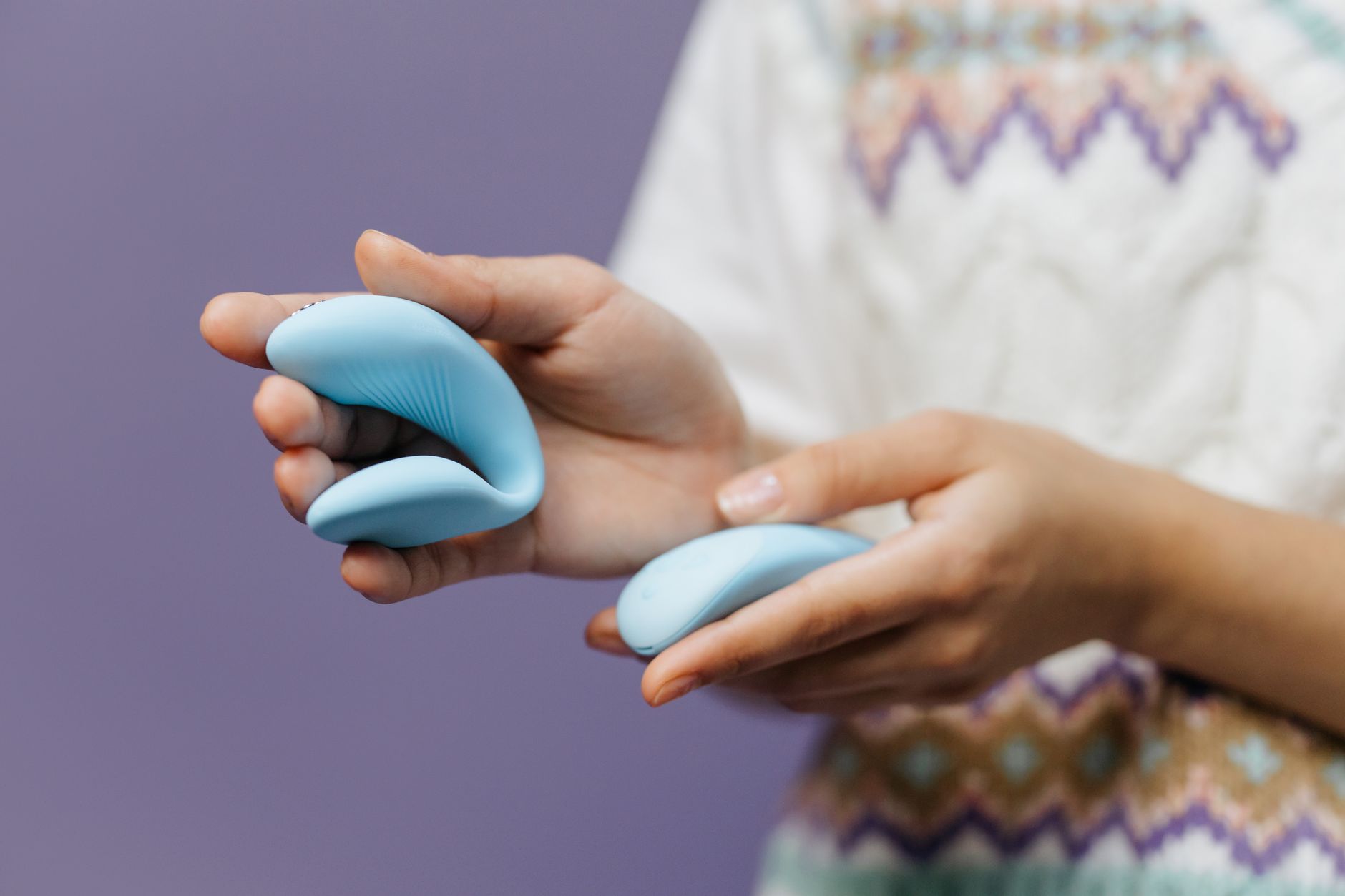
A lemon clitoral vibrator, like the Lem vibrator from Helo Nancy Shop, changes the equation because it lets you both start where you actually are instead of pretending you're somewhere you're not.
How mismatched timelines create conflict
When one partner finishes warming up and the other hasn't even started, three bad things usually happen:
First, pressure. The partner who's ready starts initiating sex, which sends a signal: "We're doing this now." The slower partner feels rushed and doesn't fully engage. They either force arousal (which doesn't work) or shut down.
Second, performance. The person who's slow starts faking readiness to avoid disappointing their partner. They're thinking about being good enough instead of feeling pleasure. Their nervous system stays braced. Orgasm gets harder. Then harder still.
Third, resentment. The person who's fast feels rejected. The person who's slow feels pressured. Over months or years, this kills intimacy.
Most couples think the answer is "just more foreplay." Sometimes that works. Usually it doesn't, because the problem isn't duration. The problem is that one person is still waiting for their nervous system to actually land.
The lemon clitoral vibrator reframe
Here's what changes when you introduce a lemon adult toy into the equation:
The partner who's naturally slower can get direct, efficient clitoral stimulation while their partner does whatever they need. That might be kissing. That might be penetration. That might be just holding each other while the vibrator does the work.
This sounds simple, but it does three things at once.
First, it removes pressure from the slower partner's body. They're not performing. They're receiving direct sensation that actually works. Their nervous system relaxes because nobody's waiting on them anymore.
Second, it stops the faster partner from feeling rejected. They get to participate, but they're not managing the other person's arousal. They're present without being responsible for turning their partner on.
Third, and this is the underrated part: it lets both of you actually enjoy each other. You're not in a race to sync up. You're in a collaboration.
The practical setup
Here's how I recommend couples use a lemon vibrator when they have different pleasure timelines:
One. Start separate, not together. Don't wait for both of you to be ready before pulling out the toy. The person who's slower starts using the Lem vibrator while the other person is still in the foreplay phase. This isn't one person using the toy while the other watches—it's both of you doing your own thing simultaneously.
Two. Find your rhythm. With a lemon sucker vibrator, the slower partner can experiment with patterns and intensity while their partner explores at their own pace. If you're the faster partner, you might enjoy penetrative play, manual stimulation, or just kissing and touching while your partner gets what they need from the toy.
Three. Sync when it feels right, not when the clock says. Once both nervous systems are actually online, you can combine whatever feels good. Some couples find that the faster partner stimulates their partner's partner with the lemon clitoral vibrator during penetration. Others use it solo while their partner enters when everyone's ready. There's no script.
Four. Talk about what you're feeling, not what you think you should feel. The slower partner might say, "I feel pressure when you watch me use the toy." The faster partner might say, "I feel left out if there's no interaction." Both feelings are real. Both are solvable with communication, not guilt.
The language that actually helps
Instead of: "You're taking too long," try: "I'm ready before you usually are. What would help you warm up?"
Instead of: "I don't feel sexy using a toy," try: "I feel vulnerable sometimes. Help me feel like I'm not being timed."
Instead of: "You don't want me," try: "I need you to be present while I get ready. How can we do that?"
Instead of: "We're broken," try: "We're different. Let's figure out how to work with that instead of against it."
The words matter because they separate the problem from the person. Your arousal timeline isn't a character flaw. Neither is your partner's. You're just operating at different speeds, and a lemon sexual toy is just a tool that stops you from having to fight about it.
What happens next
Once you've used this setup a few times, something shifts. The person who used to feel rushed stops holding their breath. Their arousal actually speeds up a little because there's no pressure. The person who used to feel rejected learns that their partner's pleasure doesn't threaten theirs. Sex becomes less about being in sync and more about being together.
You might find that you only reach for the toy some of the time now. You might find you want it every time. You might discover that giving your partner direct clitoral stimulation with the lemon vibrator while you're both enjoying other sensations is your favorite move. There's no right answer. There's just what works for you two.
When it's deeper than timing
If one partner isn't interested in sex at all, or if pleasure differences come with anger or contempt, that's a different problem. A lemon clitoral vibrator can help with pacing. It can't fix a relationship that's stuck in a pattern of resentment. If you're there, that's the time to talk to a couples therapist.
But if you're just operating at different speeds? If you both want to be close but keep tripping on the logistics? A lemon vibrator from Helo Nancy Shop, combined with the honest conversation about what you each actually need, can transform that from a chronic argument into a solved problem.
FAQ
How long should I give my partner to warm up before using a toy?
There's no magic number. Typically, arousal takes 15-45 minutes to fully build, depending on stress, hormones, and how you're wired. The point isn't to wait indefinitely—it's to stop trying to rush them and start working with their actual timeline. If your partner is usually slow, have a conversation about what feels good to them and what doesn't, then plan accordingly.
Will using a lemon vibrator make my partner feel like I'm not attracted to them?
Not if you frame it right. The toy isn't a replacement. It's a bridge. Say something like: "I want us both to feel good, and I know we have different warm-up speeds. This helps us both get what we need." When your partner sees that using the toy means more pleasure for both of you, they usually feel relieved, not rejected.
Can we use the lemon clitoral vibrator together if only one of us likes it?
Absolutely. One partner might use the Lem vibrator solo while the other enjoys other types of stimulation. Or the partner who isn't naturally drawn to it might discover they like it as part of partnered sex. Start with no expectations and see what emerges.
What if my partner has never used a toy before and feels embarrassed?
Start by talking about it outside the bedroom. Show them the device, explain how it works, normalize it as a tool rather than a judgment about their body. If they're hesitant, suggest they try it solo first. By the time you introduce it together, it's already familiar.
How do we know if the lemon sexual toy is actually helping or just hiding the real problem?
If using it makes you both feel more relaxed and connected, it's helping. If you're using it to avoid talking about deeper mismatches in desire or resentment, that's a sign you need to dig deeper. A toy should add pleasure and ease, not create new tension or avoidance.
Is it normal to have different pleasure timelines?
Completely. Nearly every long-term couple experiences this at some point. Biology, stress, medication, hormones, trauma history—all of it affects arousal timing. The couples who survive long-term are the ones who stop treating it as a failure and start treating it as a logistical puzzle to solve together.