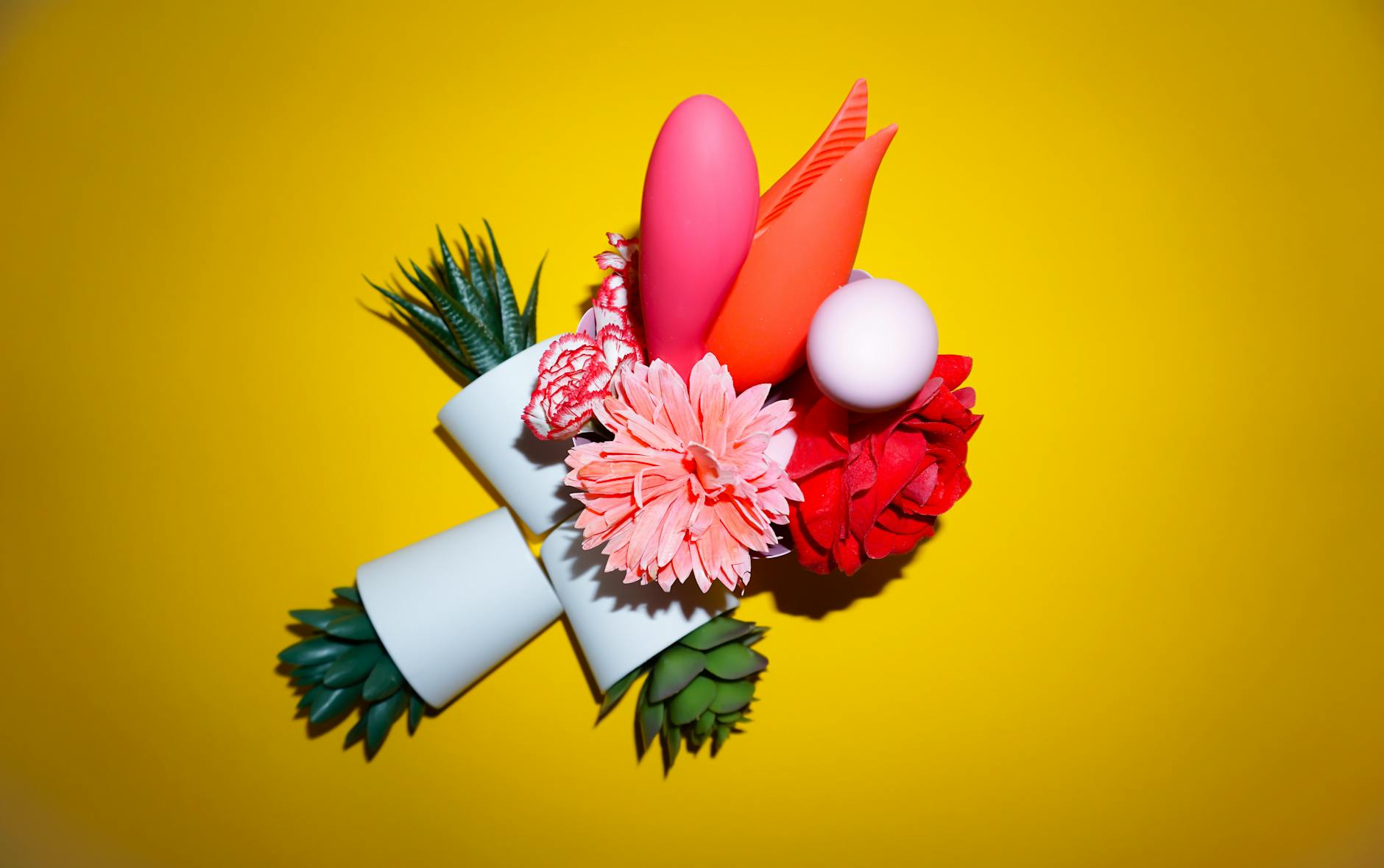
When you quit hormonal birth control, your clitoris comes back online
Let's be real. Most people don't talk about this part. You stop taking the pill or pull out the IUD, and within weeks your body starts responding to touch in ways you've almost forgotten. Sometimes that's thrilling. Sometimes it's uncomfortable. Often it's both at the same time.
Hormonal birth control dulls sensation. That's not a side effect anyone writes about in the insert, but it's the clinical truth. Synthetic hormones suppress natural testosterone production, thin vaginal tissue, reduce blood flow to the vulva, and lower overall arousal responsiveness. Your clitoris doesn't disappear. It just goes quiet.
When you stop? It wakes up. And for many people, the sensitivity that returns is stronger, sharper, and sometimes genuinely too intense for direct stimulation right away. A lemon clitoral vibrator like the Lem can help you navigate this transition without ignoring your pleasure or pushing through pain.
What actually happens to sensitivity after you quit hormonal birth control
Three physiological shifts happen almost immediately after you stop hormonal contraception.
First, testosterone rebounds. Your body starts producing its natural baseline again, usually within 2-4 weeks. Testosterone is a major driver of clitoral sensitivity and desire in everyone, regardless of gender. As it rises, so does your capacity to feel arousal. Your clitoris has more nerve endings than any other part of your body. More hormones equals more activation in those endings.
Second, blood flow increases to your genital tissue. The synthetic hormones that were suppressing vascular function step back, and fresh circulation returns. This makes the clitoris swell slightly during arousal and become more responsive to stimulation. It also makes direct contact feel more intense because there's more engorgement happening.
Third, vaginal and clitoral tissue starts to thicken again. Hormonal birth control can thin the vaginal and clitoral tissue over years of use. When you stop, collagen production normalizes, tissue rehydrates, and the architecture of your vulva shifts. This isn't a bad thing. It means you have more sensation, but it also means that the kind of stimulation you tolerated before might now feel sharp or even painful.
So you're not broken. Your body is recalibrating. And yes, you can absolutely use clitoral vibrators during this transition. You just need a different approach than someone with steady baseline sensitivity.
Why a lemon vibrator works better than other toys during this phase
A traditional vibrator works by shaking back and forth really fast. That kind of direct, repetitive friction is exactly what you don't want when your clitoris is already oversensitized. Why lemon vibrators work better than traditional vibrators for clitoral pleasure goes into the full mechanics, but here's the short version.
The Lem and other air-suction clitoral vibrators use gentle pulsing suction instead of vibration. That suction stimulates all the nerve endings in the clitoral complex without the mechanical friction that can feel raw or burning when tissue is already sensitive. You're not rubbing the surface. You're creating a gentle pressure wave that activates sensation deeper in the clitoral structure.
For someone adjusting to post-birth-control sensitivity, this is a game changer. You get powerful sensation and strong orgasms without triggering that sharpness or irritation that direct vibrators can cause.
Start with the lowest setting and go lower
This is the non-negotiable part. The Lem has multiple suction levels. You want to start at level 1, not level 3 where you might start if you were on birth control. Your clitoris is sensitive right now. Respect that.
Set the vibrator to the gentlest suction and hold it just barely touching your clitoris. Not pressed down. Barely there. You're testing sensation, not chasing orgasm. The point is to see how your body responds when you remove the pressure of expectation and intensity.
Many people find that starting at level 1 actually builds a stronger orgasm than jumping to level 3. The slow build creates more blood flow, more engorgement, and ultimately more sensation even though you're starting quieter. Patience here is strategic, not just safe.
Warm up your clitoris first
Direct suction on cold tissue feels harsher. You need blood flow to the area before you bring a lemon clitoral vibrator anywhere near your clitoris. Spend 10 to 15 minutes on foreplay. Touch yourself with your fingers, use a partner's hand or mouth, or just take time getting aroused through whatever pathway works for you.
The goal is visible engorgement. Your clitoris should look slightly swollen and feel warm before you introduce the vibrator. This is not extra time wasted. This is preparation that changes how stimulation feels.
If you're solo, this is straightforward. If you have a partner, this is a great moment to communicate what's happening in your body. Tell them your clitoris is more sensitive than it used to be and that you need a slower buildup. Most partners appreciate that clarity. It removes the guessing and makes the experience better for both of you.
Use lubricant even though you don't need it
After stopping birth control, your natural lubrication usually returns quickly as hormone levels stabilize. You might not have dryness like you did on hormonal contraception. But you should still use a small amount of water-based lubricant around the entrance and on the outside of your vulva.
Why? Because lubricant creates a smoother surface between the suction cup and your skin. This reduces any dragging or tugging sensation that can feel uncomfortable when tissue is hypersensitive. The lubricant also slightly dampens the intensity of the suction, which is exactly what you want during this phase.
You don't need much. A dime-sized amount spread around your clitoris is enough. This is about comfort, not about slick performance.
Expect your orgasms to feel different than they did on birth control
This isn't a problem. This is information. When you were on hormonal contraception, your orgasms might have been delayed, muted, or required a lot of stimulation to arrive. Now they're going to be faster, stronger, and more explosive. Some people find this amazing. Some find it startling.
Your nervous system is learning a new set of response patterns. Orgasms that come faster aren't broken. They're just different. If the intensity or speed surprises you, that's worth noting. It means your body is responding normally to returning hormone levels.
One thing to watch for: multiple orgasms become easier after hormonal contraception ends. You might have one orgasm and immediately want another. Your refractory period shortens. This isn't obligatory. You can have one and stop. But if you want to explore multiple orgasms, now is actually the easiest time in your cycle to access them.
Pain is different from intensity. Know the difference
Intensity that's exciting and makes you catch your breath is fine. Pain that feels sharp, burning, or like raw tissue is not fine, and you should stop immediately.
During the first few weeks after stopping hormonal birth control, some people experience a sensation that's hard to categorize. It's strong but not quite comfortable. The solution is usually to reduce the suction level, increase warm-up time, or add more lubricant. Those three changes address almost all discomfort.
If you have true pain that doesn't improve with lower settings and longer warm-up, how to use a lemon vibrator when touch feels overwhelming or too intense has more targeted strategies. If pain persists beyond two weeks, check in with your doctor. Sometimes tissue inflammation after stopping hormonal contraception needs topical attention.
Time matters. Use your lemon vibrator during the right part of your cycle
Now that you're off hormonal birth control, your natural menstrual cycle is coming back. This matters because your sensitivity changes across your cycle. In the follicular phase, before ovulation, your clitoris is less sensitive. In the luteal phase, after ovulation, it's more sensitive.
During the first few weeks as you're adjusting, you might want to use your lemon clitoral vibrator during the follicular phase when you'll have a bit more tolerance for stimulation. As your body settles into its new hormone pattern, you can explore the luteal phase. But there's no rush.
This is backwards from the messaging you usually get. Most sex advice tells you to push through and get comfortable with sensation. I'm telling you that respecting your cycle and working with your body's natural rhythm, especially during hormonal transition, is the smarter strategy.
When to expect your sensitivity to stabilize
Most people find that clitoral sensitivity stabilizes about 4 to 8 weeks after stopping hormonal birth control. That's how long it takes for your hormone levels to fully settle into their new baseline and for your nervous system to adjust to increased sensation.
After that window, you'll have a much clearer sense of your actual baseline sensitivity. What feels overwhelming now might feel perfect then. You might find you want stronger stimulation, or you might discover that gentle suction is genuinely your preference.
The Lem and other air-suction vibrators stay useful through all of these phases. You're just adjusting which level you use and how you approach warm-up.
What to tell your partner during this transition
If you have a partner, they need to know that your body is changing and that you might want different things sexually than you did three months ago. This is not about them. It's about you recalibrating sensation and pleasure after a major hormonal shift.
Specific things to communicate: "My clitoris feels more sensitive right now," "I need more warm-up time," "Direct pressure feels sharp, let's try a different angle," or "I'm exploring what feels good with a new toy, want to watch?"
Most partners respond well to clear, practical information. What they struggle with is ambiguity. If you're grinding your teeth through sex because you're uncomfortable but don't want to seem difficult, they'll sense that something's off and blame themselves. Honesty is easier on both of you.
Frequently asked questions
How long after stopping birth control should I wait before using a vibrator?
You can use a vibrator immediately, but the first week or two you might find that sensitivity is still ramping up. If you used vibrators while on hormonal contraception, your body remembers what that felt like. After you stop, the sensation will feel different and stronger. Start with your lemon vibrator at the lowest setting and take it slow. Your clitoris isn't fragile, but it is waking up.
Will my sensitivity eventually go back to "normal"?
Your sensitivity will stabilize at its natural baseline, which is actually higher than what you experienced on hormonal birth control. That new baseline is your actual normal. It's not going anywhere unless you go back on hormonal contraception. This isn't a temporary state. It's your body returning to its native sensitivity. That can feel like a lot at first, but most people come to prefer it because orgasms are easier to access and more intense.
Can hypersensitivity after stopping birth control mean something is wrong?
Hypersensitivity that arrives in the first month after stopping hormonal contraception is almost always just hormone rebound. It's not an infection or a medical problem. If the sensitivity comes with pain, burning that doesn't improve with lower settings, or discharge that looks unusual, that's worth a doctor visit. But simple increased sensation is normal and expected.
Should I use numbing products to reduce sensitivity?
No. Numbing creams or desensitizing products will work against what's actually happening in your body, which is a return to normal sensation. Instead of numbing yourself, you're better off using a lemon clitoral vibrator with lower settings and patience. You're not trying to make your body less sensitive. You're learning to work with increased sensation.
Is there a difference between sensitivity and arousal after stopping birth control?
Yes. Sensitivity is how strongly you feel touch. Arousal is your body's interest in sex. Hormonal birth control suppresses both, but they don't always return at the same rate. You might feel more sensitive to touch but not more aroused by it. Or you might feel more desire but need to adjust to the increased physical sensation. These are separate and both normal. A lemon vibrator helps because it can address sensation independently of arousal state.
How do I know if increased sensitivity is permanent or temporary?
Increase sensitivity after stopping hormonal birth control is permanent in the sense that it reflects your actual baseline. It's temporary only if you restart hormonal contraception. After about 8 weeks, your sensitivity will feel normal and stable. You won't be adjusting anymore. What you feel at that point is your actual normal, and it's here to stay.
The takeaway
Your body is not broken. It's waking up. That wake-up period can feel intense, overwhelming, or sometimes just plain weird. A lemon clitoral vibrator is a great tool for exploring increased sensation without forcing yourself through discomfort. Start low, build slowly, use warm-up time, and be honest with your partner about what's happening. In a few weeks, you'll have a new baseline and a clearer picture of what actually feels good when hormones aren't in the way.
If you have specific questions about your body's response to stopping birth control, reach out to our team. We're here to help you navigate pleasure at every stage of your cycle and life.