
The real issue with switching contexts
Here's what happens: you're in bed with your partner. The rhythm is good, the intimacy is there. Then they're gone—travelling, working late, you're asleep at different times—and suddenly you're alone with your own pleasure. It's not just physical. Something about the mental and emotional transition feels off.
You're not broken. You're just shifting between two very different neurological states, and most people never talk about how to do that gracefully.
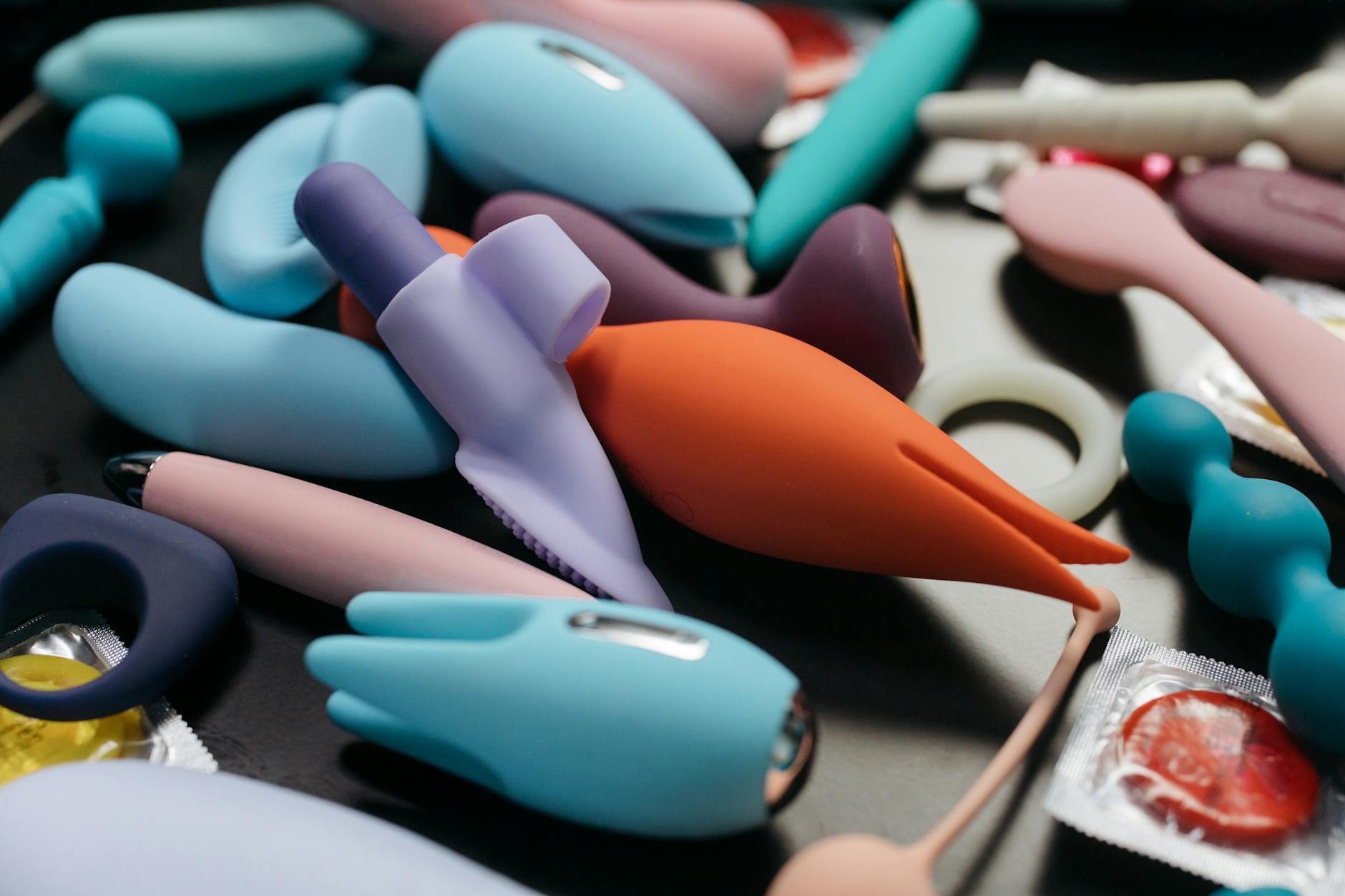
Photo by cottonbro studio on Pexels
Why the transition feels jarring
When you're with a partner, your body enters a specific mode. There's external rhythm, responsiveness, anticipation. Your arousal builds in relation to someone else's presence and energy. The clitoris responds to that relational feedback loop.
When you're alone, that external stimulus disappears. You have to generate the entire experience yourself—the rhythm, the pressure, the pacing, the mental narrative. Your clitoral vibrator becomes your solo instrument instead of a duet tool.
The problem isn't that you can't enjoy solo pleasure. It's that switching between "receiving" and "generating" requires a deliberate mental shift, and most people try to power through it without adjusting their approach.
Starting your solo session with intention
Don't jump straight into intense stimulation the moment your partner leaves the room. That's like trying to sprint without warming up.
Spend five to ten minutes alone before touching yourself. Lie in the bed where you two were together, or move to a different space entirely—this depends on whether you want continuity or clear separation. Some people find it helpful to keep the physical space the same; others need to break the association.
Use that time to check in with yourself. How's your body feeling? What do you actually want right now, separate from what you wanted ten minutes ago with your partner? Is this about release, exploration, comfort, or just reconnection with your own pleasure? The answer changes how you approach the lemon vibrator.
If you're using a clitoral suction device like the Lem, this warm-up time is especially important. Why lemon vibrators require less pressure than traditional toys applies even more when you're setting your own intensity. You don't have a partner's natural rhythm to anchor you, so your own baseline matters more.
How to dial in your lemon vibrator when you're alone
Start lower than you think you need to. When you're partnered, external energy carries some of the work. When you're solo, you're generating everything, which means even a lower setting on your lemon sexual toy can feel more direct.
With the Lem or any lemon clitoral vibrator, begin at pattern one or two. Spend at least two minutes there before increasing. This does two things: it lets your body register what solo sensation actually feels like, and it prevents you from chasing intensity when what you actually want is presence.
If you're used to a partner's touch—which has variation, softness, breaks in rhythm—you might find that consistent suction at first feels too much or too mechanical. That's not a sign the device isn't right. It's a sign you're adjusting to a different kind of stimulus. Give yourself three to five solo sessions at a lower intensity before assuming the pattern needs to be higher.
The rhythm question: find your own beat
When you're with a partner, their rhythm becomes your rhythm. You're syncing. Alone, you get to choose, and that's actually disorienting at first.
Some people move the lemon vibrator slightly—a micro-motion that changes the angle of suction. Others stay still and let the device do the work. Some switch between patterns and speeds. Others prefer consistency.
There's no "right" rhythm. But there is a useful protocol: pick one approach for your first few solo sessions and stick with it for at least ten minutes. Notice what your body responds to. Does staying still feel meditative? Does movement feel more engaging? Does switching patterns create a build that feels right, or does it scatter your attention?
Your solo rhythm will almost certainly be different from your partnered rhythm. That's not a problem. It's just different.
Managing the mental shift
Physically transitioning to your lemon vibrator is only half the work. The bigger piece is mental permission.
When you're with a partner, their pleasure is partly their responsibility. You can lean on the dynamic, the presence, the shared intention. When you're alone, all of that is on you.
Some people find that helpful and freeing. Others find it heavier. If you're in the second camp, that's worth acknowledging rather than pushing through.
One strategy: explicitly grant yourself permission before you start. Not in a performance way, but genuinely. "I'm doing this for me. My pleasure matters when I'm alone, not just when someone else is here." Say it out loud if that helps.
Another: have a specific context for solo play. Some people use solo time as exploration—trying a new pattern on their lemon vibrator, or testing different speeds they wouldn't use with a partner. Others use it as continuity—recreating a sensation they enjoyed together. Both work. Pick one, commit to it, and let that context carry the session.
What happens with arousal when you're alone
Why lemon vibrators feel different during arousal has everything to do with your nervous system state. When a partner is present, your nervous system is in a different zone—more reactive, more alert to external cues.
Alone, you're the only nervous system in the room. That means arousal builds differently. It's often slower but can become deeper. The clitoral sensations might feel more localized instead of full-body, which is normal and fine.
If you notice your arousal plateauing or drifting when you're solo, don't immediately assume you need more stimulation. Sometimes you need less—backing off the intensity on your lemon clitoral vibrator for a minute or two can actually reset and deepen arousal instead of pushing past it.
Moving between sessions: the pacing principle
If you're having partnered sex one night and solo time the next, notice what feels right for your body.
Some people find solo play enhances partnered sex the next time. Other people prefer a day or two of recovery between different contexts. There's no universal rule—it depends on your body, your energy, and what you're trying to accomplish.
The only real guideline: don't use solo sessions as a substitute for addressing what's off in your partnered sex. If you're only getting satisfaction alone, that's information worth having a conversation about, not a reason to just accept the gap. A lemon vibrator is a wonderful tool for pleasure in both contexts. It's not a band-aid for disconnection.
The opening conversation
If you have a partner, talking about your solo pleasure isn't always necessary—but it usually helps. You don't need to narrate every session, but a simple check-in can prevent assumptions.
"I've noticed I enjoy solo time with my toy when you're travelling. It helps me feel connected to my own pleasure." That's it. You're not asking permission. You're sharing context. Most partners find that information clarifying and often connecting—it signals that your sexuality doesn't depend on them, which actually deepens the dynamic.
How to talk about lemon vibrators with your partner goes deeper into this if you want more language, but the principle is simple: transparency and confidence usually land better than secrecy or apology.
People Also Ask
Can you use the same lemon vibrator for both partnered and solo play?
Absolutely. In fact, it's often ideal. Using the same tool in both contexts helps your body learn that pleasure is consistent across different scenarios. Clean it between uses with warm water and mild soap, or use a toy cleaner. The Lem vibrator is designed for both solo and partnered use, so you're not compromising anything by moving between them.
Why does solo play feel less intense than partnered play with the same vibrator?
Intensity isn't just about the device. It's about context, attention, and your nervous system state. When you're with a partner, there's external energy, anticipation, and relational feedback that amplifies sensation. Alone, you're generating everything yourself. Lower intensity can actually be more satisfying because it requires you to be more present rather than chase bigger stimulation.
How long should it take to feel good during solo play?
There's no minimum. Some days it's five minutes. Some days it's thirty. If you're consistently taking much longer alone than with a partner, it's worth checking in with yourself: are you distracted? Is the device at the right intensity? Do you need a different physical setup? But "longer" doesn't mean "something's wrong." It often just means solo pleasure has a different rhythm.
Should I use my lemon sexual toy when I'm not in the mood?
Not as a rule. If you're forcing it, you're often just creating more friction. But if you're ambivalent—not sure if you're in the mood until you start—that's different. Sometimes five minutes with low-intensity stimulation from your lemon clitoral vibrator actually wakes up arousal that was just sleeping. Give yourself permission to stop if it's not landing, but also permission to explore when you're uncertain.
Does using a vibrator during solo time make partnered sex feel less satisfying?
Not for most people. In fact, the opposite is usually true. Having reliable solo pleasure actually reduces pressure on partnered sex to be everything. When partnered sex doesn't have to deliver your only orgasm or your only pleasure, it gets better because you're not depleting each other with expectation.
How do I know if I'm using my lemon vibrator correctly during solo sessions?
Your body will tell you. If something feels good, you're doing it right. If it's uncomfortable, switch the pattern, lower the intensity, or change the angle. There's no "correct" technique—just what works for your body today. That might be different tomorrow, and that's fine. The Lem and other lemon vibrators are intuitive enough that you'll find your rhythm quickly through a little experimentation.
Bringing it together
Transitioning between partnered and solo pleasure with a lemon clitoral vibrator isn't about being good at both. It's about recognizing they're two different skills that require different approaches.
The rituals matter: the warm-up, the intentionality, the permission you give yourself. The device matters—a lemon vibrator designed for suction responds differently than a traditional vibrator, and understanding that helps you calibrate your solo sessions. And the mindset matters: your pleasure alone is not a consolation prize when your partner isn't around. It's its own full experience.
Give yourself grace during the transition. Your body and mind will find their rhythm in both contexts. The best part of having a tool like the Lem is that it's reliable enough to let you experiment without pressure.